Battery and battery lead requirements
In order to utilize the full capacity of the Multi RS, batteries with sufficient capacity and battery cables with sufficient cross section should be used. The use of undersized batteries or battery cables will lead to:
Reduction in system efficiency.
Unwanted system alarms or shutdowns.
Permanent damage to system.
See table for MINIMUM battery and cable requirements.
Battery capacity | Lead acid | 200 Ah |
Lithium | 100 Ah | |
Recommended DC fuse | 35 mm2 cable | 125 A |
70 mm2 cable | 200 A | |
Minimum cross section (mm2) per + and - connection terminal | 0 - 2 m | 35 mm 2 |
2 - 5 m | 70 mm 2 |
Warning
Consult battery manufacture recommendations to ensure the batteries can take the total charge current of the system. Decision on battery sizing should be made in consultation with your system designer.
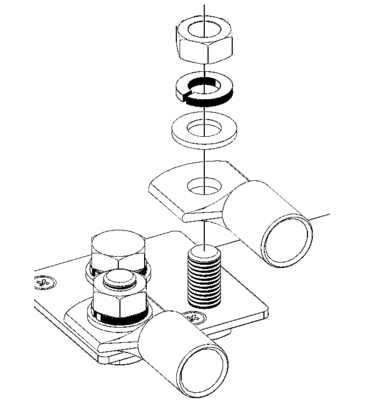
 | Always use a torque wrench with insulated box spanner in order to avoid shorting the battery and / or battery cables. Maximum torque: 14 Nm Avoid shorting the battery cables. |
| Install a DC main switch and DC main fuse in the system and only place the DC main-fuse for the Multi RS after all necessary DC connections have been made. |
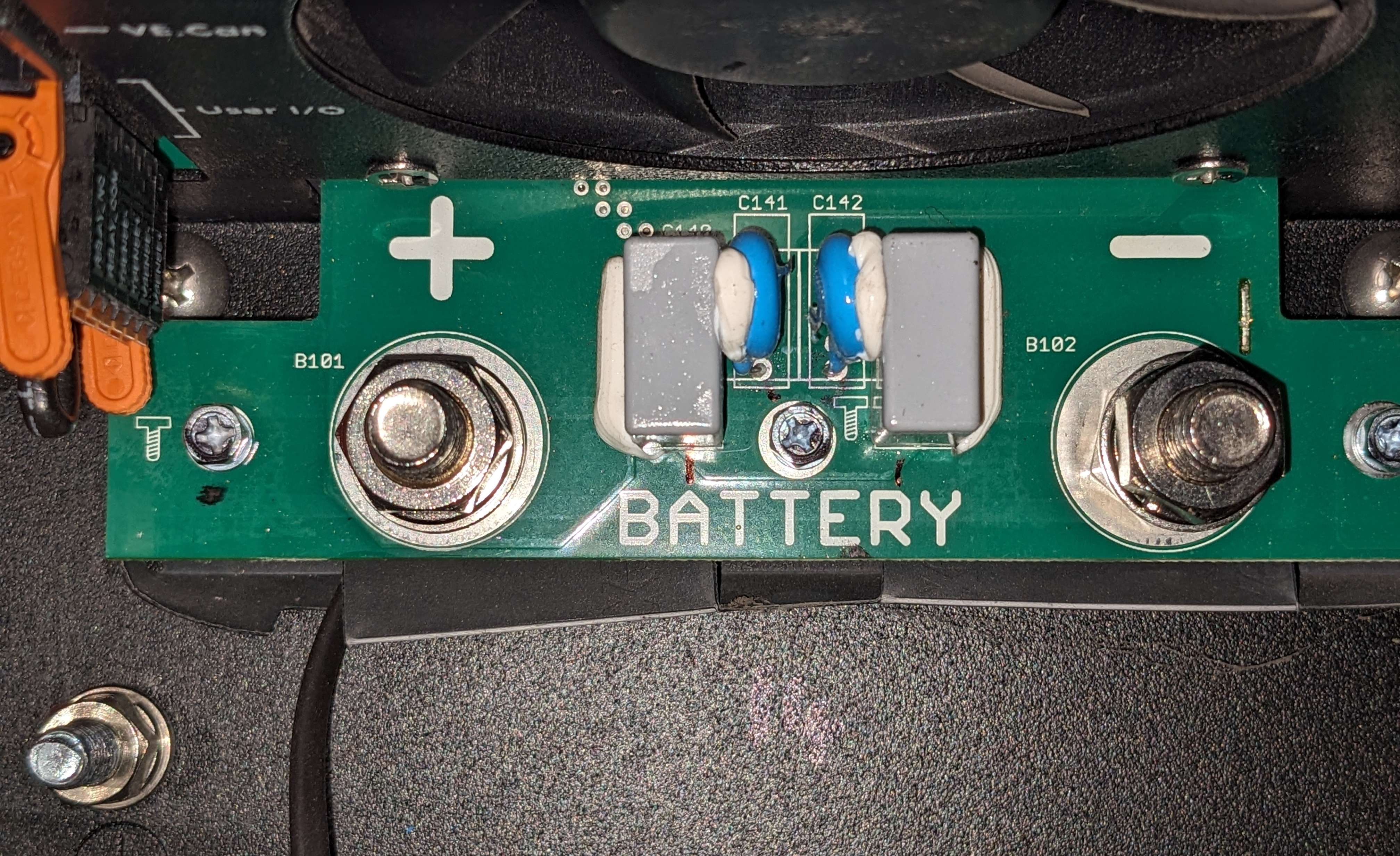
To access the battery terminals, undo the two screws at the bottom of the enclosure and remove the cover to expose the wiring compartment.
WarningThe bottom nut is soldered to the PCB; do not attempt to loosen it. |
|
|
|