
After eight years living aboard their narrow boat Welsh Wizard, Dave and Paula Hill reflect on their experience of off-grid power – Lead acid, and Lithium – as they slowly explore Britain’s 4000km of inland waterways. Dave says:
As a retired mechanic and former garage owner, I’ve spent most of my working life being sceptical of grand claims about new technology. I’ve seen plenty of products promise the earth and fail to deliver, so when my wife and I moved aboard our narrowboat, we didn’t jump straight into lithium batteries.
Instead, we deliberately spent our first year living with a brand-new lead-acid battery bank.
Some people thought it was an odd decision, but we wanted to learn. We wanted to understand how much electricity we actually used, develop good habits, and experience the realities of off-grid living before investing in something more advanced.
Looking back, it was one of the best decisions we made.
Learning the hard way
Typical loads include:
- Washing machine operation, including 60°C cycles
- Inverter-powered domestic appliances
- Refrigeration
- General liveaboard electrical consumption
- Seasonal air-conditioning support
Like most boaters, we soon became aware of every amp-hour we used. Should we put the washing machine on? Should we watch another film tonight? Do we need to run the engine before bed?
Lead-acid batteries are excellent teachers because they force you to pay attention. They taught us where our electricity went, how much difference a sunny day made, and how often battery levels influenced our everyday decisions.
More importantly, looking back, they have provided a reference against which to compare our new life with Lithium.
Discovering lithium
During that first year I spent a lot of time researching battery technology and listening to other boaters’ experiences. Jonathan Cecil’s Journey With Jono YouTube channel was one of the things that encouraged me to look more seriously at LiFePO₄ batteries.
The more I learned, the more convinced I became that lithium wasn’t just another expensive upgrade—it was a genuinely better way of living off-grid.
Eventually we took the plunge.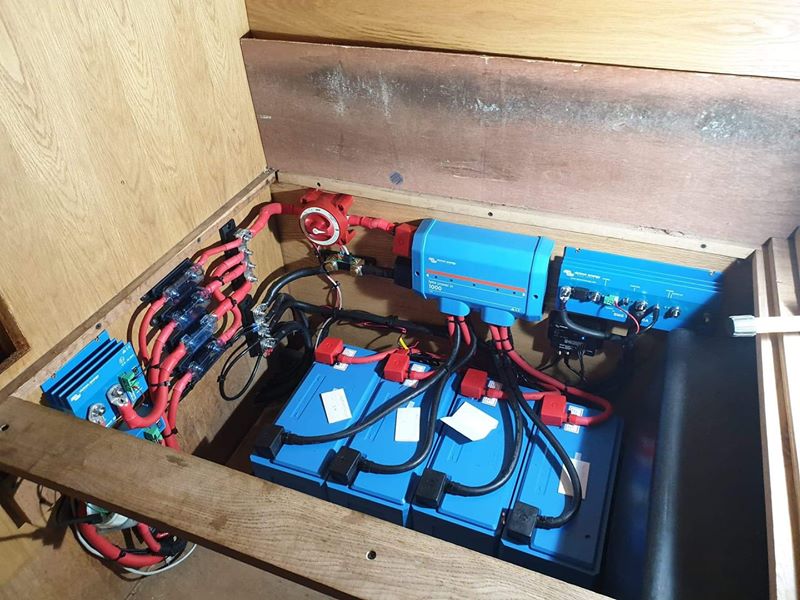
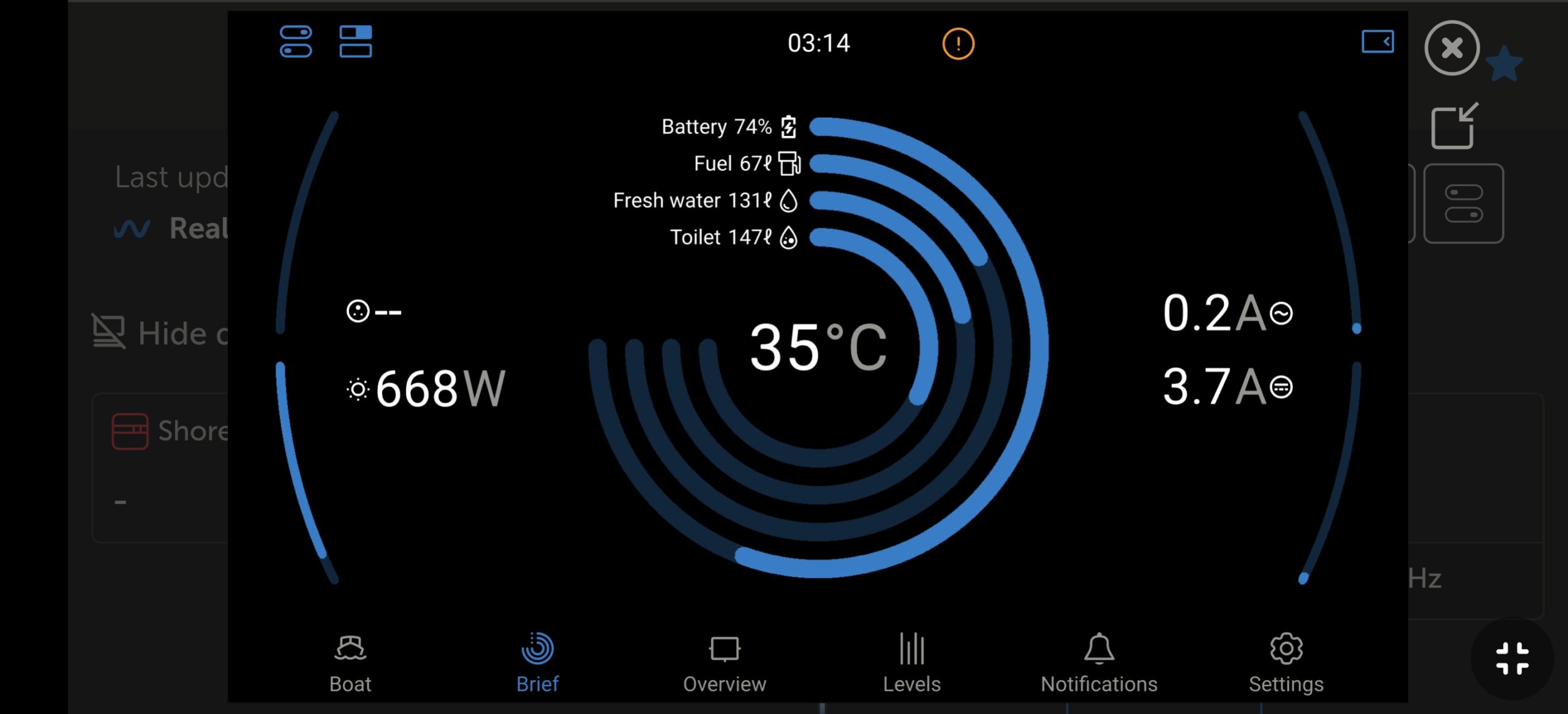
Our system consists of four 100Ah Victron LiFePO₄ batteries, a MultiPlus 3000 inverter charger, around 660W of solar from two Panasonic panels, and VictronConnect for remote monitoring. Over the years I’ve also integrated our tank sensors, GPS tracking, geofencing and temperature monitoring, via our Cerbo GX data communication centre turning it into far more than just a battery system.
People often expect me to talk about charging speeds or battery capacity. Those things are important, but they’re not what transformed life aboard. The biggest change was psychological.
With lead-acid batteries, I’d find myself looking at the battery monitor every evening and immediately starting to do mental calculations. How much power have we used? What’s tomorrow’s weather forecast? Should I run the engine now, just in case?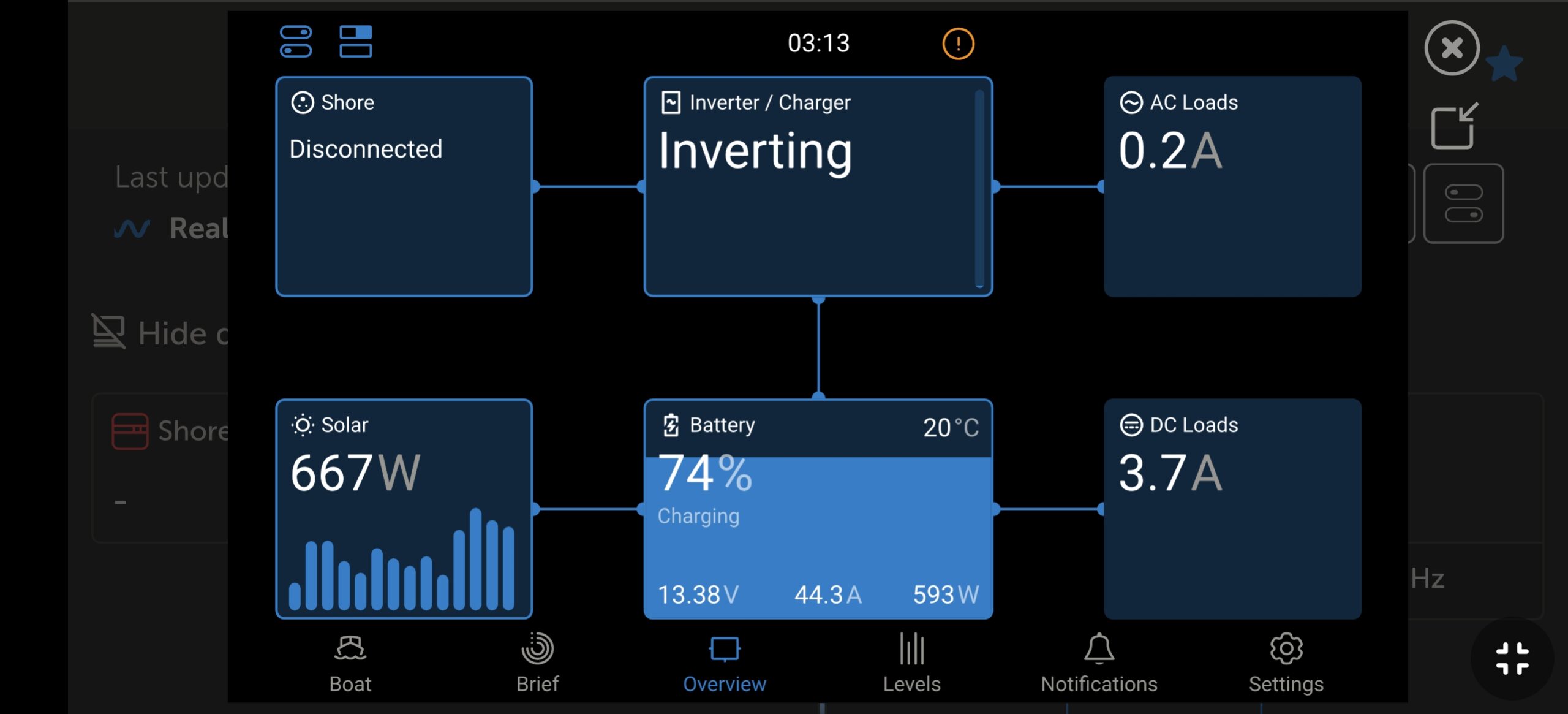
Nowadays, if I look at the batteries and they’re sitting at 40% state of charge, and tomorrow is forecast to be sunny, I simply go to bed. Any boater who has lived with lead-acid batteries will know exactly what I mean. That constant background worry has disappeared.
The installation comprises
2 x Solar Panels offering 660wp
SmartSolar MPPT 150 /50 solar charge controller
4 x Lithium Battery Smart 12.8 / 100Ah
MultiPlus 12 3000 120
Smart BMS 12 200 Battery Management System
Lynx Distributor 1000 DC busbar with four monitored fuses
Battery Protect ensures starter battery never becomes depleted
Smart Shunt 500A battery monitor
Cerbo GX communication centre provides system control, digital inputs from tank senders etc.; and UI access via the GX Touch 70 screen locally and via the VictronConnect app from anywhere in the world.
Letting the sun do the work
Our solar array has become the real workhorse of our system. Throughout the summer we often go for extended periods without needing to run the engine or generator simply to charge the batteries. One of my favourite examples is our air-conditioning unit. On the hottest days, the solar panels are producing their maximum output—often enough to cover much of what the air conditioner is using. There’s something wonderfully satisfying about the sunshine powering the very thing that’s keeping you cool.
More than an energy system
Over the years, the Cerbo GX has become the information hub for the whole boat.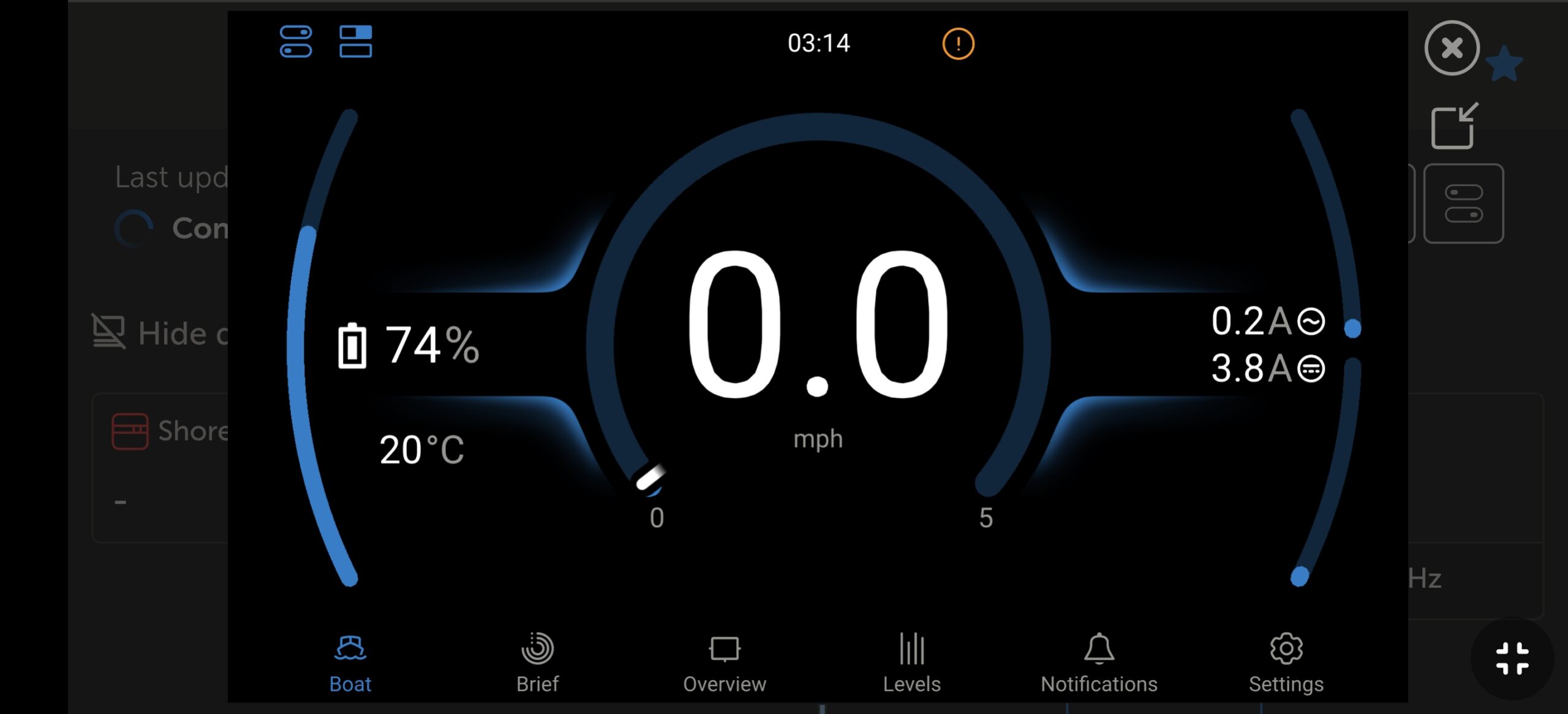
I connected our existing tank sensors using a Victron interface, so I can see fresh water, diesel and black-water levels alongside battery and solar information, all from one screen – or even remotely using the VictronConnect app. Instead of walking around the boat checking different gauges, everything is available in one place.
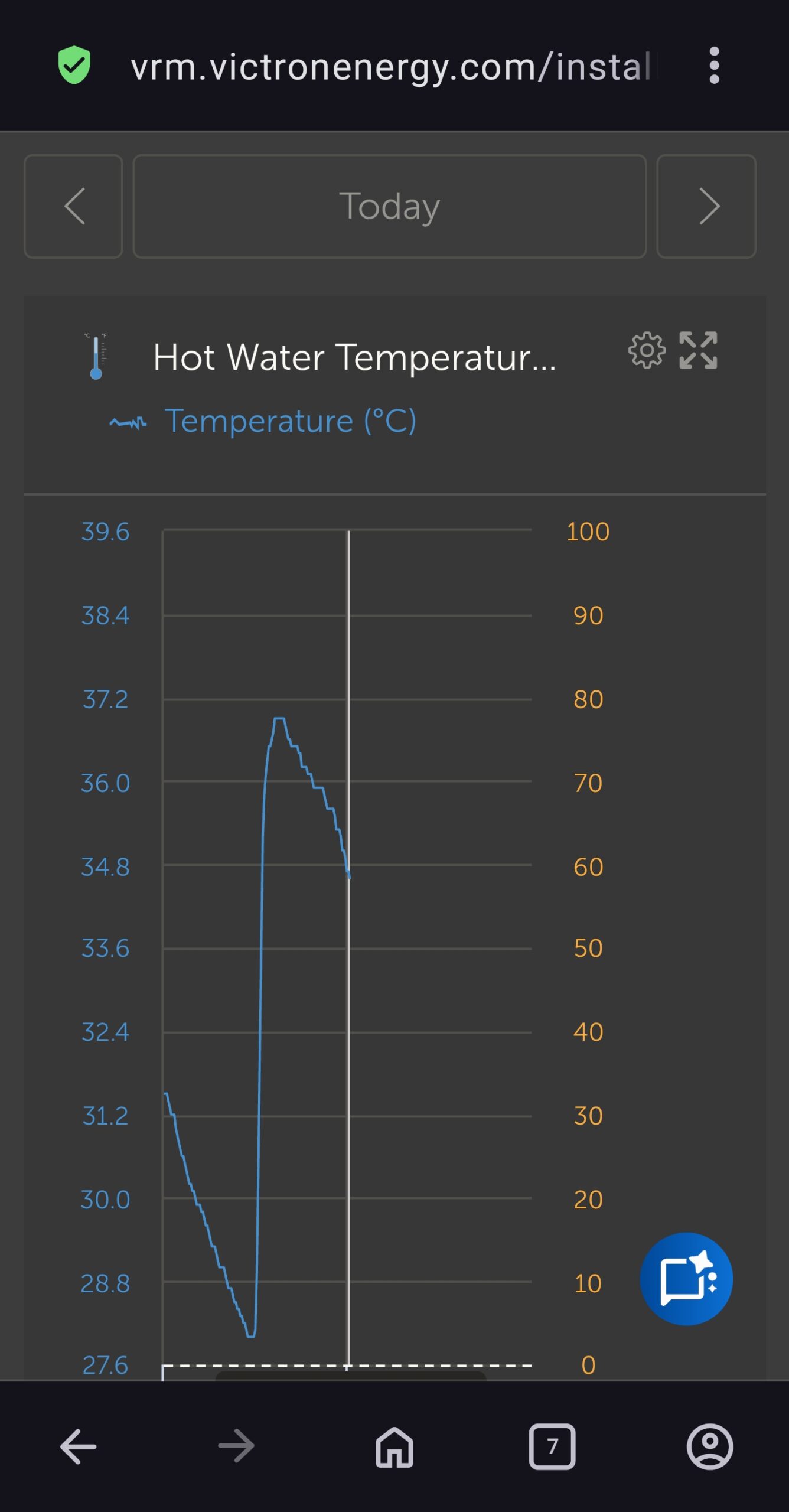
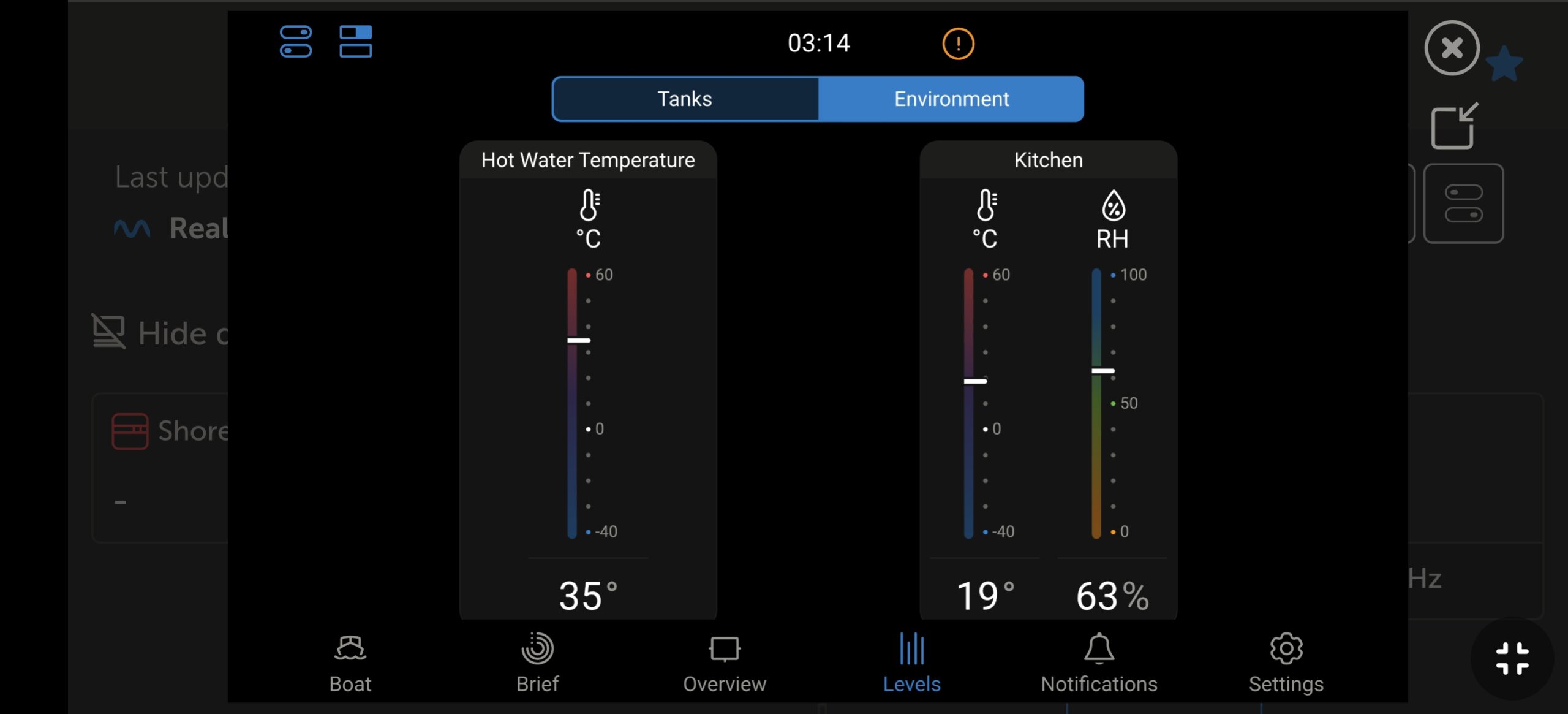
I also installed an Ruuvi temperature sensor on the calorifier. That may sound like a small thing, but it has proved surprisingly useful. Instead of guessing whether there is enough hot water available, I can simply check the actual temperature.
This helps avoid unnecessary use of the immersion heater while ensuring there is still enough hot water for washing up and daily tasks.
I installed a USB GPS receiver, which lets me monitor the boat’s location remotely, review journeys and set up a geofence around our mooring. If the boat ever moves outside that virtual boundary, I receive an email alert.
Fortunately I’ve never needed it for security, but it provides real peace of mind whenever we’re away.
Little things matter
One of the things I’ve enjoyed most is adding sensors over the years.

I monitor cabin temperature, fridge temperature and inside the calorifier as I mentioned earlier – I can simply check the temperature and decide whether it will need a boost. None of these features is revolutionary on its own. But together they’ve removed countless little uncertainties from everyday life aboard.
Has it paid for itself?
People often ask whether lithium batteries pay for themselves. The honest answer is that they probably have. Reduced engine running, lower fuel consumption, fewer servicing hours and almost no battery maintenance all add up over time.
As a former mechanic, I’ve always thought using a propulsion engine purely to charge batteries was an inefficient way of doing things. Every unnecessary engine hour means more fuel, more wear, more servicing, more noise and more vibration. Over nearly nine years, avoiding many of those charging hours has undoubtedly saved money. But for me, that’s not really the point.
The real benefit
The real benefit is that we no longer organise our lives around battery charging. We use electricity much as people do in a conventional home. The washing machine—including 60°C washes—runs through the inverter without drama. The batteries quietly get on with their job while we get on with enjoying life afloat.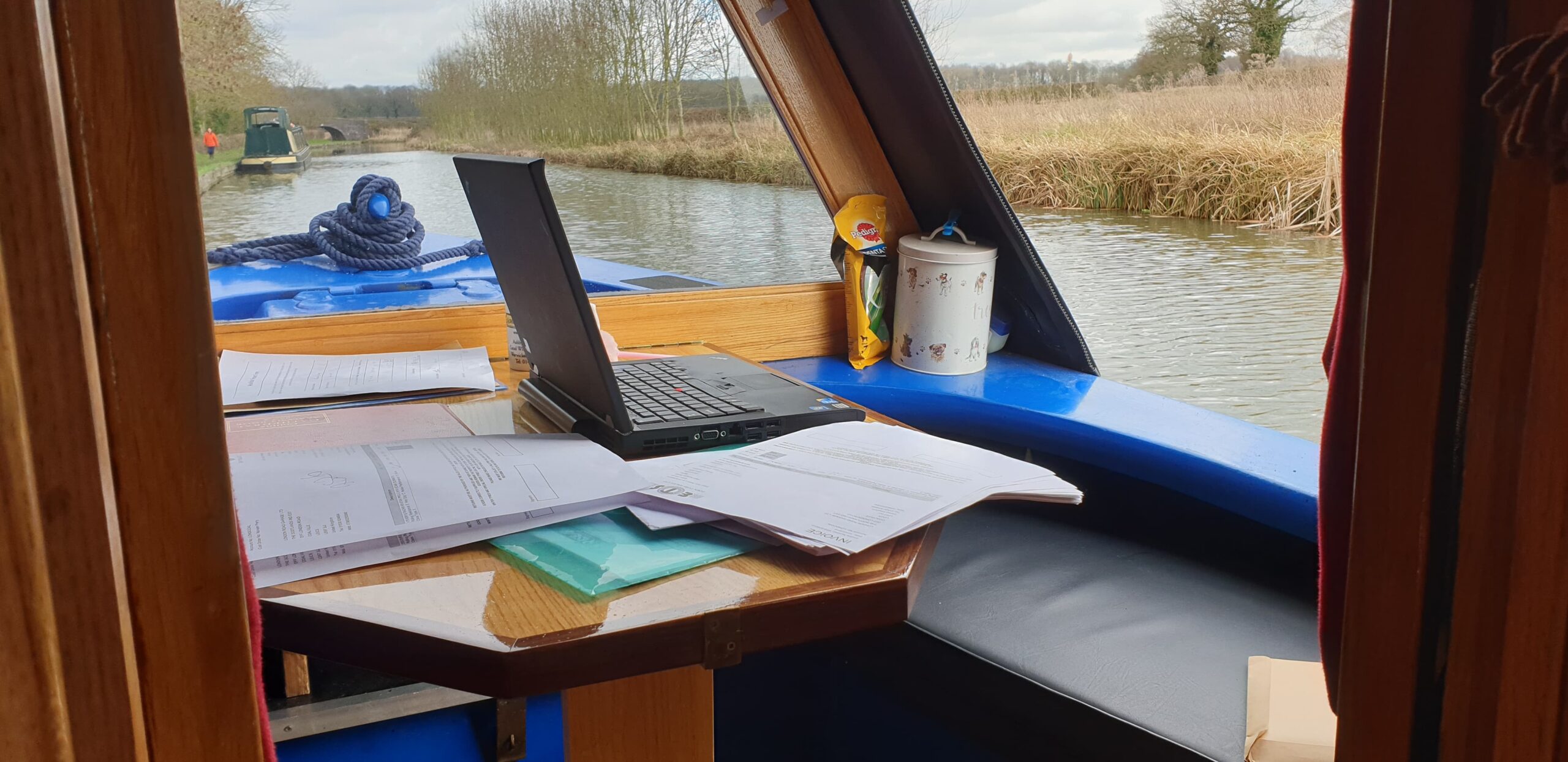
Looking back, what started as a battery upgrade has become a complete onboard management system, bringing together energy, monitoring and information in one place. And after nearly nine years, the greatest compliment I can use to describe our relationship with the power system is that I rarely even think about it …and as any mechanic will tell you, that’s the hallmark of good engineering.