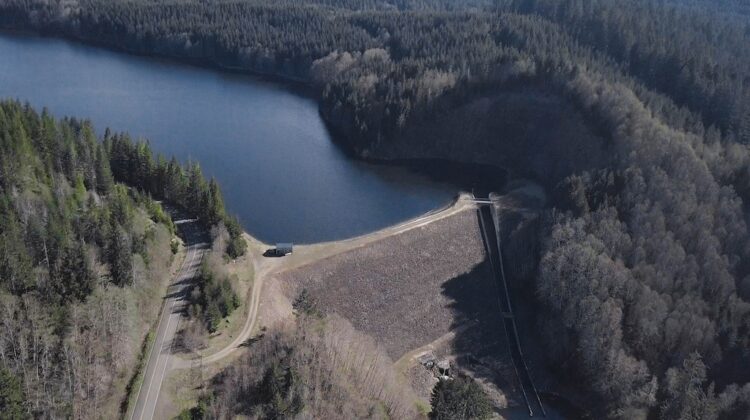
A remote reservoir which provides drinking water to over 35,000 customers is entirely monitored and controlled by an off-grid power installation which must not fail. Electricity energises their control systems, operates the water treatment plant, and opens and closes pump valves.
The lead acid batteries which had provided back up power were coming to the end of their life, but also the site operator, McMinnville Water & Light, based in Oregon, U.S., noticed that staff were having to spend much more time at the facility – finding problems, analysing power information and putting mitigations in place. The system was old and difficult to work with.
Understanding the problems facing the water engineers enabled power system designer Artek to reimagine their installation; to choose the hardware, and to tailor the software to offer an optimised power installation which meets their needs uniquely.
Working alongside Cascade Solar, the challenge was to add provide redundancy, meet highly variable load demands, provide remote data communications, comply with strict seismic requirements, and to make the power system easier for their technicians to read and understand with clear live data information.
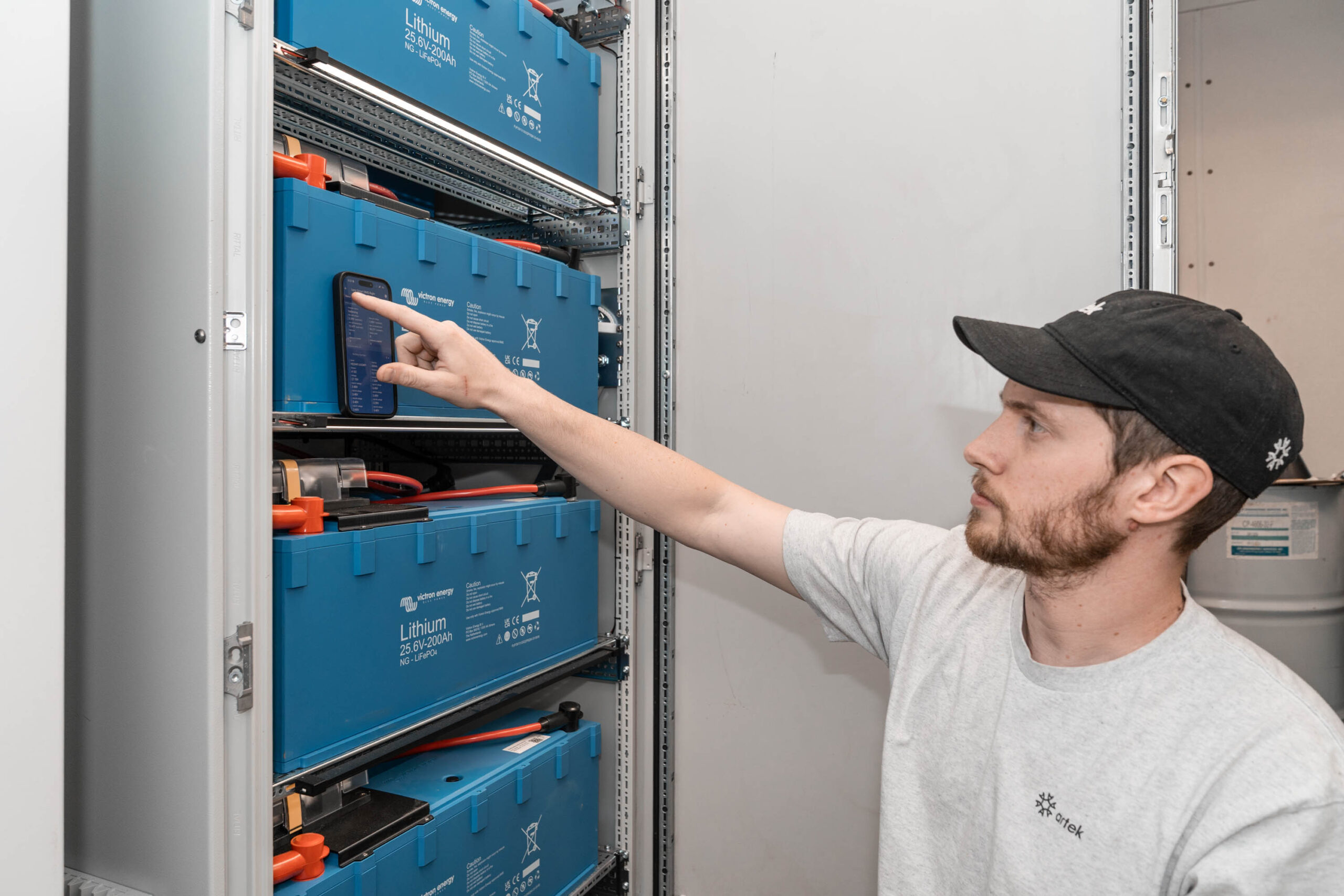
At the heart of the installation is an 80kWh, 48V Lithium NG battery bank which are managed by dual Lynx Smart BMS NG units. The duality of the installed architecture adds an important layer of redundancy and protection—critical in an environment where maintenance access is limited and failure mustn’t be allowed.
Power delivery at the site is split across two inverter-charger systems, each designed for a specific role: In the first instance a MultiPlus 48/2000 operates 24 hours per day, providing the power required to monitor and control the site’s equipment. The operators have clear visibility of the system’s status via the GX Touch 70 and can maintain control of water flow infrastructure.
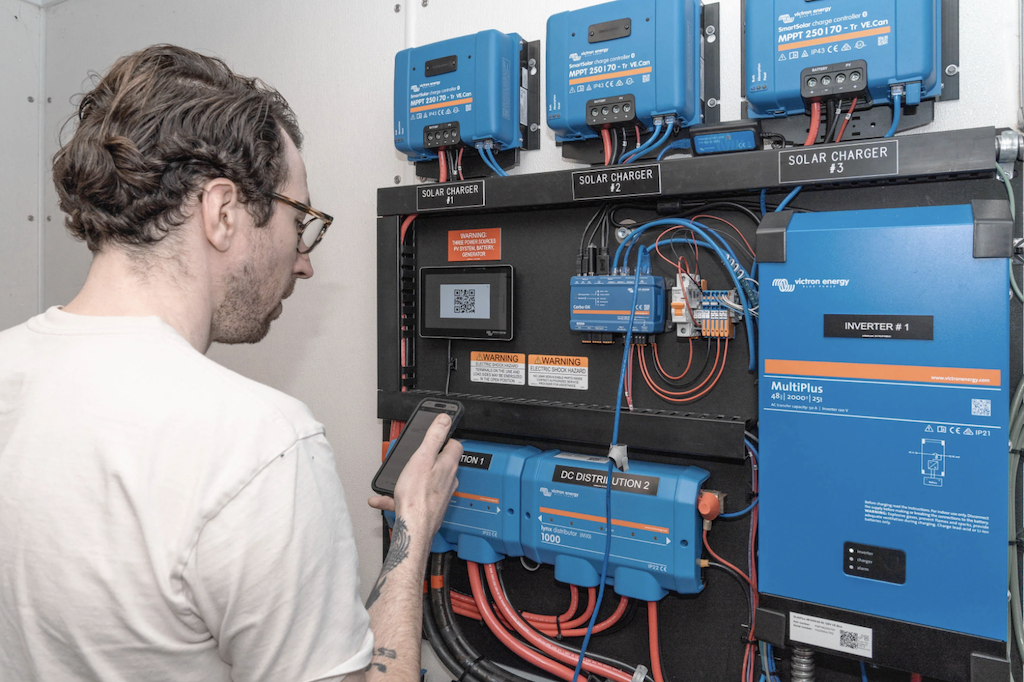
Alongside it, a more powerful split-phase system comprised of dual MultiPlus-II 48/5000 units handle the site’s high-demand loads – powering the nitrogen accumulation pump used to actuate hydraulic valves. They also manage battery charging when a generator is running.
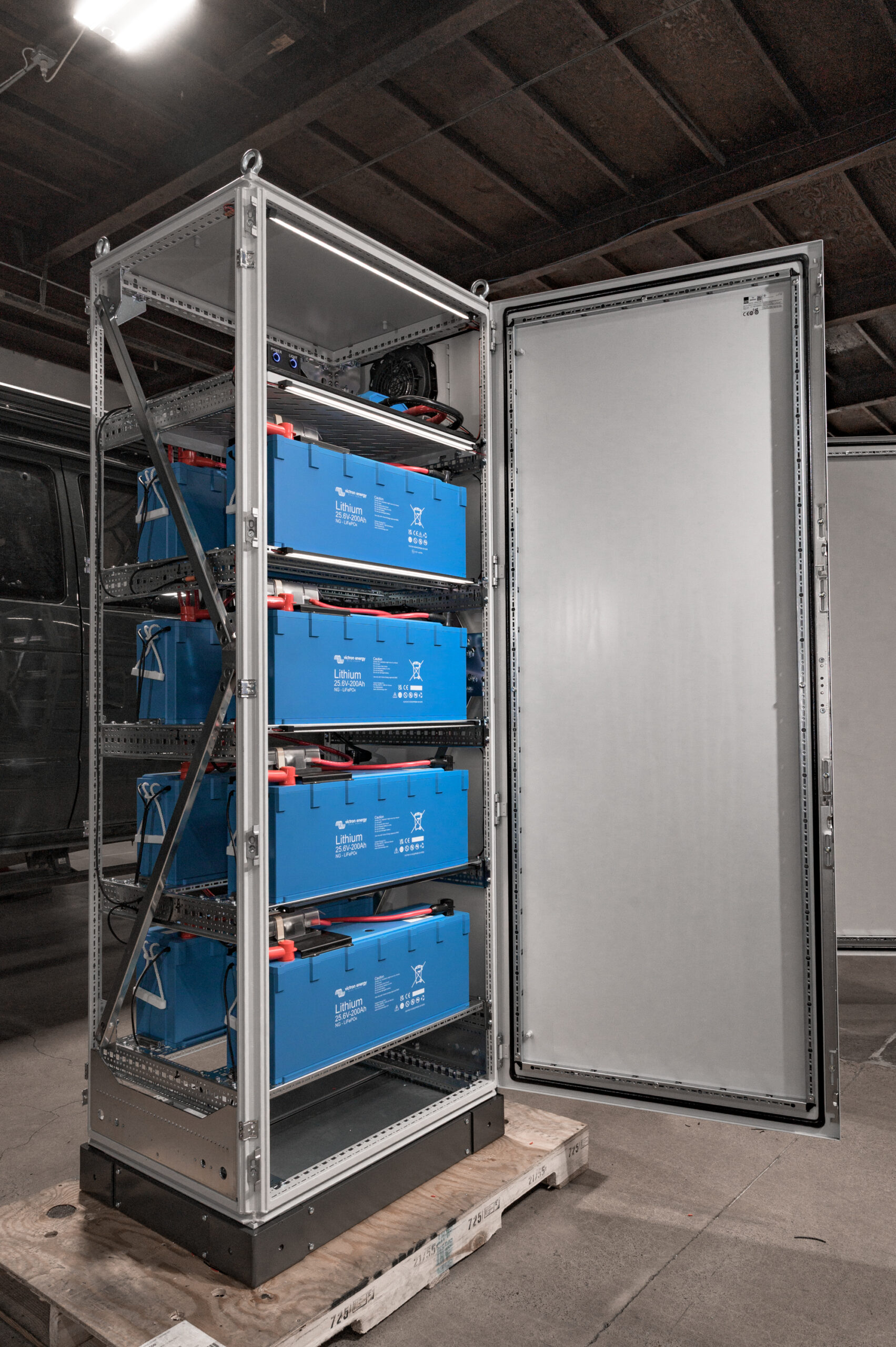
This dual-inverter architecture allows the system to efficiently balance continuous low-load demand, punctuated by intermittent high-power requirements.
Node-RED flow provides bespoke automation
Rather than running the larger inverter system continuously, Artek implemented a demand-driven control strategy.
Using a Cerbo GX as the central communication hub, custom Node-RED logic was developed to deliver inverter operation idealised for real site conditions. The system responds directly to signals from an Allen-Bradley PLC, which indicates when pumps are running—or need to run.
When that signal is activated, the split-phase MultiPlus-II system comes online. When it’s not needed, the system remains idle – reducing standby consumption and improving overall efficiency.
The same logic also responds to generator activity. The generator has an auto start – triggered by a preset battery state of charge – and the MultiPlus-II’s begin to charge the depleted battery bank at maximum generator efficiency.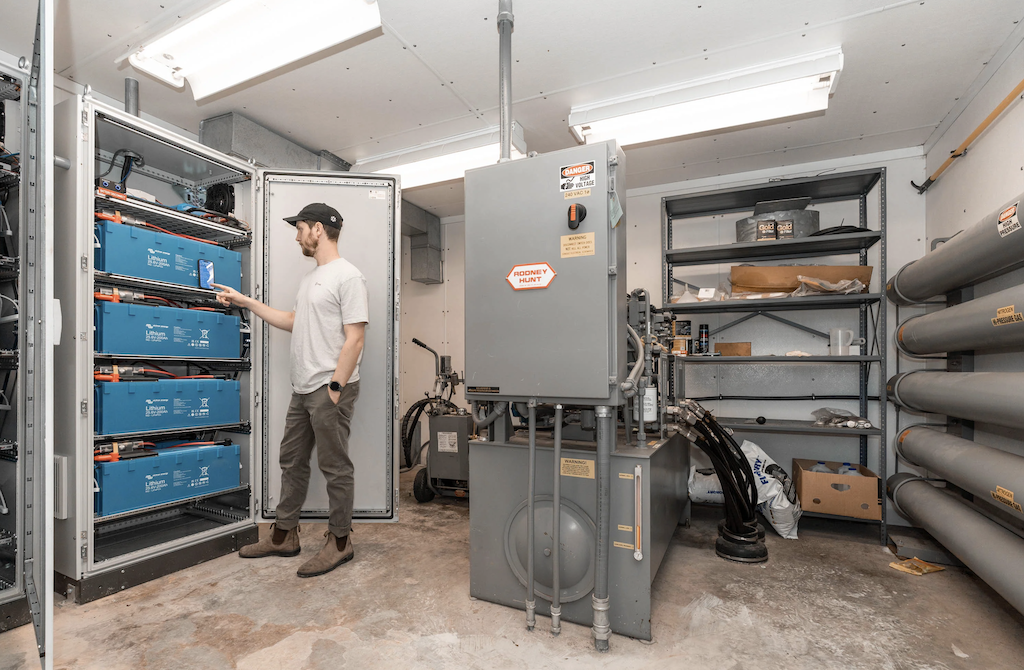
The implementation includes:
- Custom Node-RED control logic triggered by generator state and a pump-demand input
- Automatic/Mode control for the split-phase inverter-charger system
- Continuous-power architecture preserved through the always-on primary inverter-charger
- Custom gui-v2 QML overrides for combined AC load visibility across both inverter systems
- Native Cerbo GX Modbus integration retained for SCADA communications
- Deployment tooling for GX UI updates, flow deployment, backup, and rollback
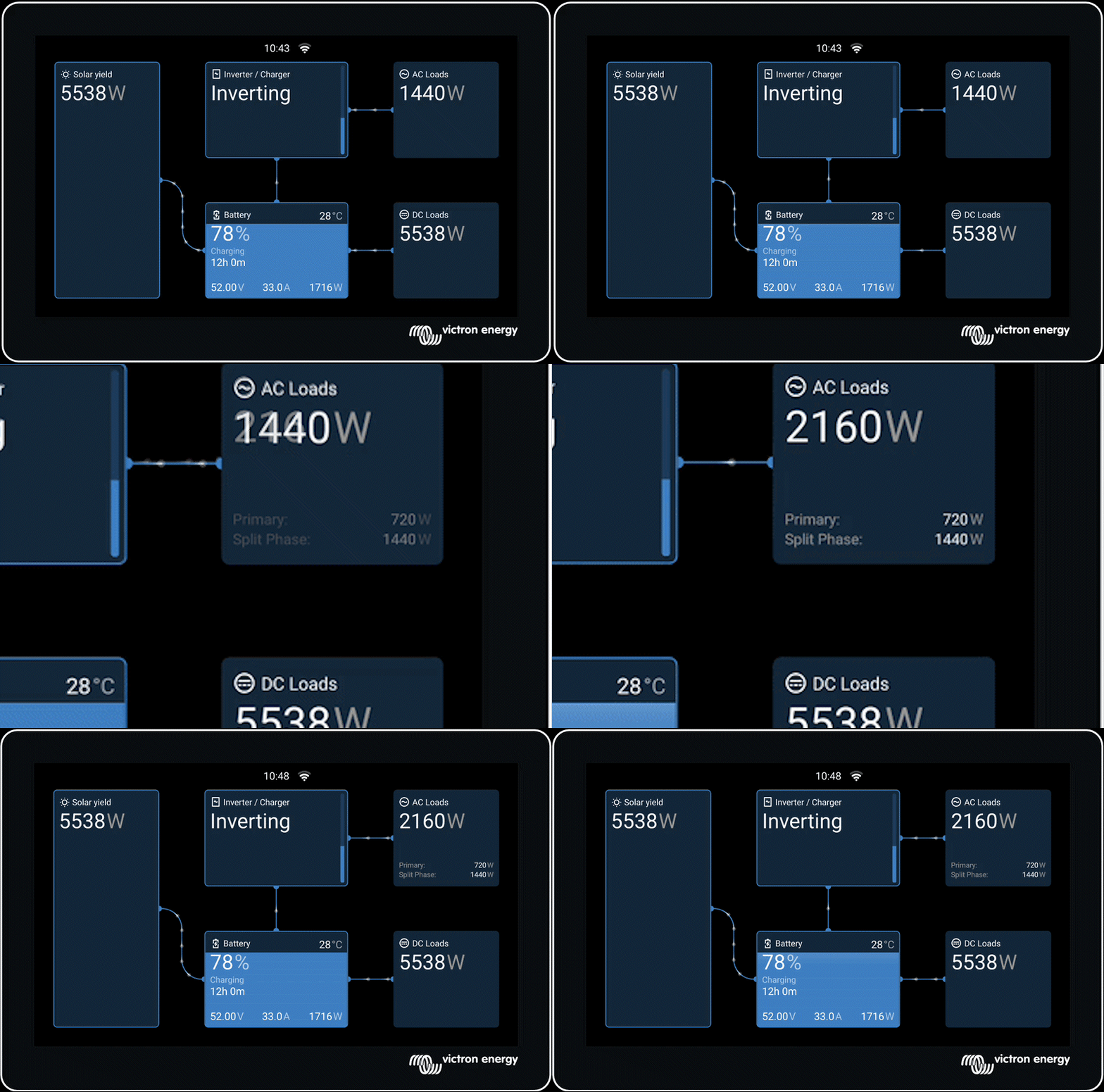
These enhancements keep the system simple for operators while ensuring power is always available.
Solar and redundancy design
Battery charging from a 5kW solar array is split into three independent strings, managed by three SmartSolar MPPT 250/70 VE.CAN charge controllers. If one part of the array is offline, the rest continue to operate, offering system resilience. To meet local safety standards, the array also integrates Tigo rapid shutdown which allows module-level de-energisation for maintenance or during emergency situations.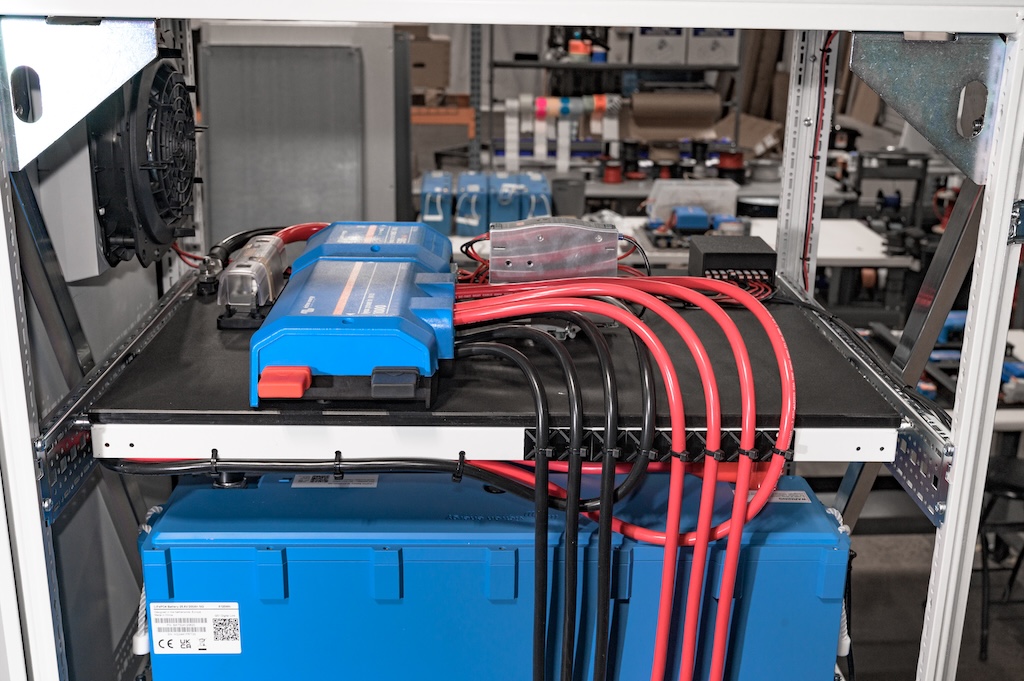
Better visibility, better decisions
For operators on site, understanding system behaviour quickly is crucial. Artek have extended the Venus OS interface on the Cerbo GX by providing a custom GUI modification which offers a combined view of the total AC load across both inverter systems. This gives technicians a clearer, more intuitive understanding of what the system is doing at any moment, improving troubleshooting and confidence in operation.
Unnecessary complexity was avoided by employing the Cerbo GX’s native Modbus capabilities for SCADA integration, focusing customisation only where it delivered real value.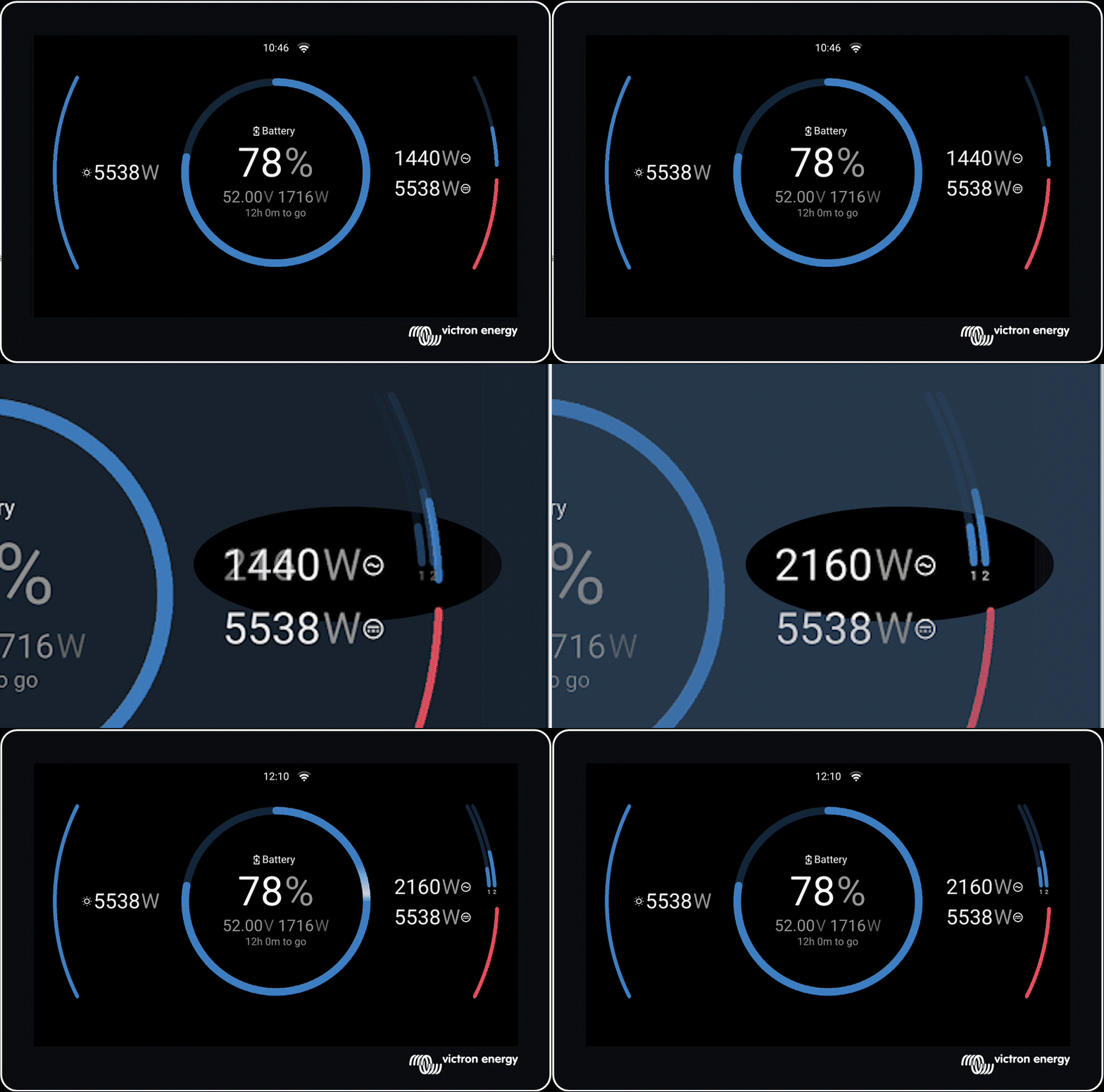
Who benefits?
This installation supports the entire McMinnville community. Reliable water supply depends on reliable energy, and this system ensures that critical infrastructure continues to operate regardless of grid availability.
At the same time, site operators benefit from a system that is robust, efficient and easy to manage. Demand-driven inverter control reduces fuel use and wear on equipment, while improved visibility makes day-to-day operation more straightforward.
In McMinnville, the water will keep flowing.