Jake Archer’s diagnostics experience gained in the automotive industry, working with luxury vehicles, has unexpectedly led to him being in demand on the water.
Marine power installations can get complicated – combining AC and DC power distribution; battery charging from multiple sources: generators, alternator, solar; connections to shore power (of variable quality); together with the need to take care of special-case grounding in a way which also prevents galvanic corrosion.
Cowboy is a 74 foot steel-hulled luxury motor vessel with a working-boat pedigree. Built for long-range exploration it’s packed with industrial-grade marine equipment including a Cummins 440hp diesel engine, two power generators, electric steering, and nine tanks holding thousands of gallons of fuel, fresh water, black water – all of which need to be fluid balanced to keep the vessel in trim.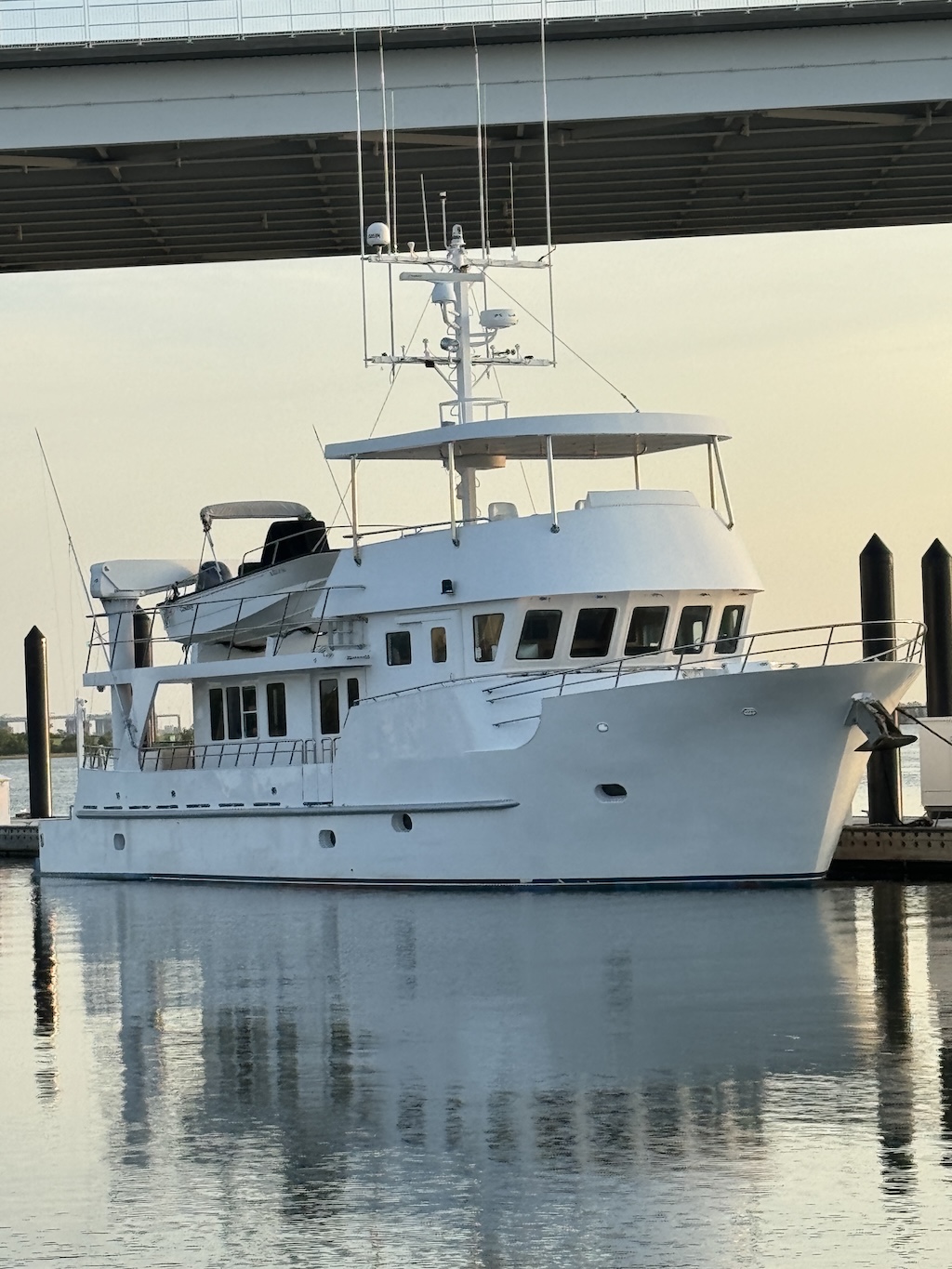
Jake and his team at Marine Diagnostic Services based in New Bern, North Carolina, were invited on board to take a look at a recent power installation in which the inverters, battery, and generator were not communicating properly. They’d been installed by engineers who wanted to achieve a good result for the owner, but couldn’t.
Subsequent interventions had also failed to achieve an automated power system. Instead, top quality devices had been installed with no unified goal, resulting in frequent power dropouts; lots of ‘if this happens then do that…‘ manual interventions; together with unexplained power anomalies.
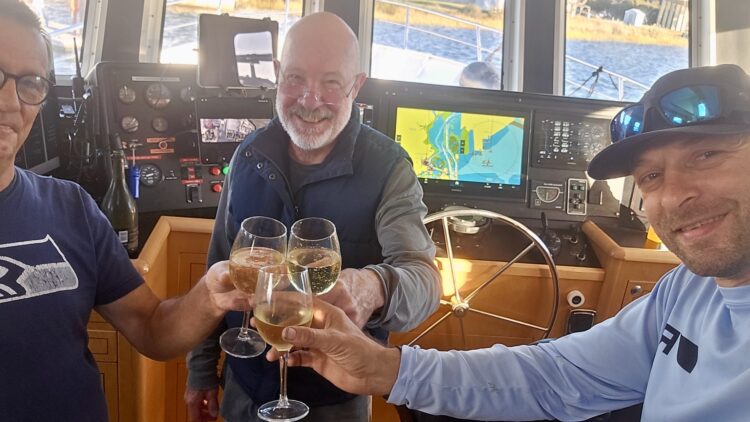
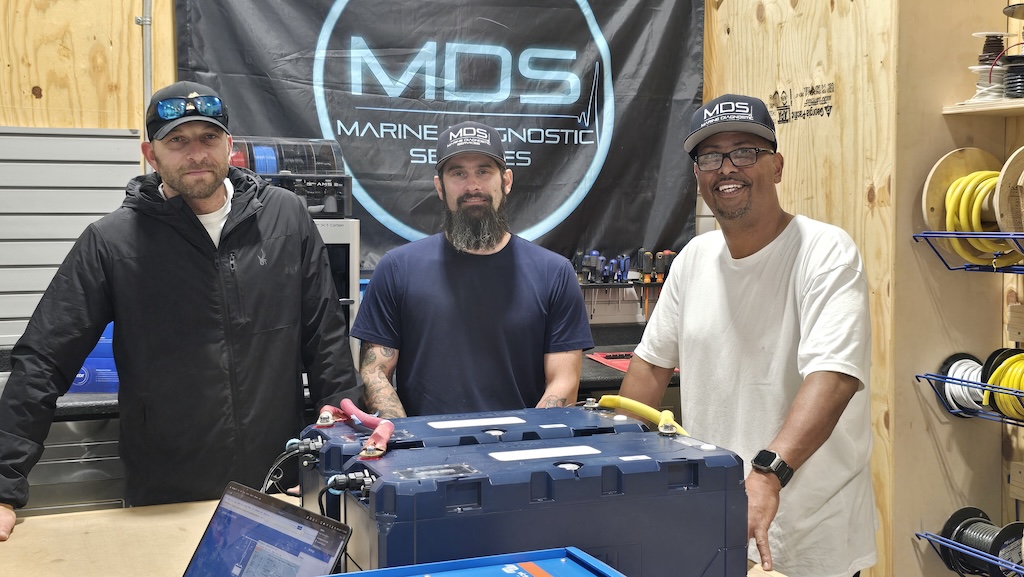
Boat owner Jim Price (pictured centre, at the head of this article) also experienced battery storage limitations well below his requirement; and the manual switching was keeping him on his toes running from one end of the boat to the other. In short, the fun went out of boating.
New Insight
Jake’s analytical approach – checking voltages, strain testing, thermal imaging and simply tugging on cables to see if they were properly crimped – revealed the boats problems one by one. There were quite a few.
Rebuilding the system would take a while, but the result would be the difference between night and day.
Installation as-built
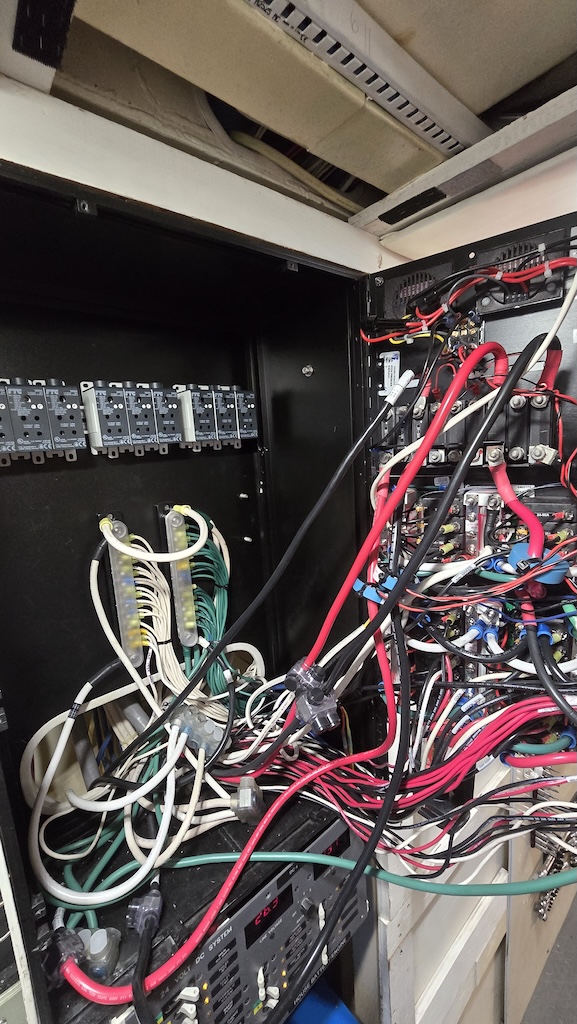
Taking a bird’s eye view, the boat’s power supply had not been designed or installed with an overall unifying vision. Its various parts didn’t work together. Inverter installation was incomplete – there were four 24V 5000VA inverters mounted on the wall, but only two were actually connected, and those hadn’t been correctly configured. Cable lengths were inconsistent, which is a major issue in paralleled inverter systems.
AC
AC wiring in the cabinet was untidy and poorly executed, with incorrect bonding and a shore-based grounding arrangement. The bonding was configured after the inverters – like a house – creating double bonds. While this bonding method can comply with the American Boat and Yacht Council (ABYC) standards – of which MDS is a member – it must be executed with careful attention to the rest of the system.
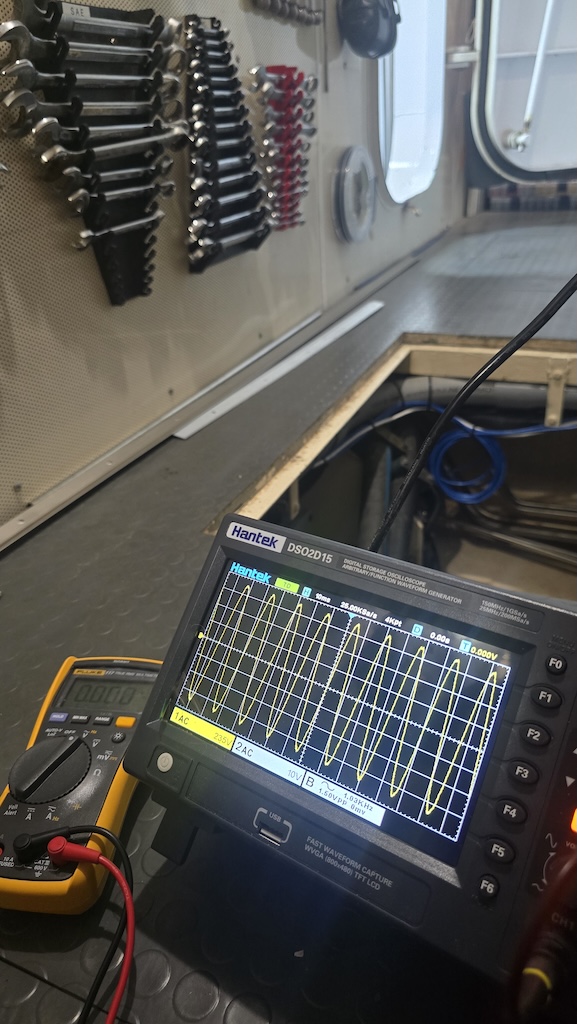
The shore-power inlet arrangement was a 50A cable with an IsoBoost Transformer whilst a vessel this size could easily make use of a 100 Amp service. The boat system was relying on load balancing and other workarounds to run devices at peak supply because large AC loads were destabilising the system.
When the air conditioning started up, for example, peak loading of the generator would cause the power output quality to suffer forcing the Quattro Inverter/Chargers to take over the load instead of operating as a charger for the batteries. It was later discovered that a failed capacitor which should have been providing a soft start to one of the air-conditioning units was faulty, and was contributing to the instability.
Also, the yard had ordered 230V European single-phase Quattros which were incorrect for the intended split-phase 240V setup.
Generator
The generators were failing to autostart/autostop when the batteries dropped or rose through a pre-set State-of-Charge or Voltage parameters with the result that the owner had to continually monitor the batteries himself, and manually start the generator.
DC
On the DC side some battery cabling and terminations were so insecure that a tug-test was enough to pull the 4/0 cables out of their lugs. There were 100 foot cable runs to the generators, inverters and alternators.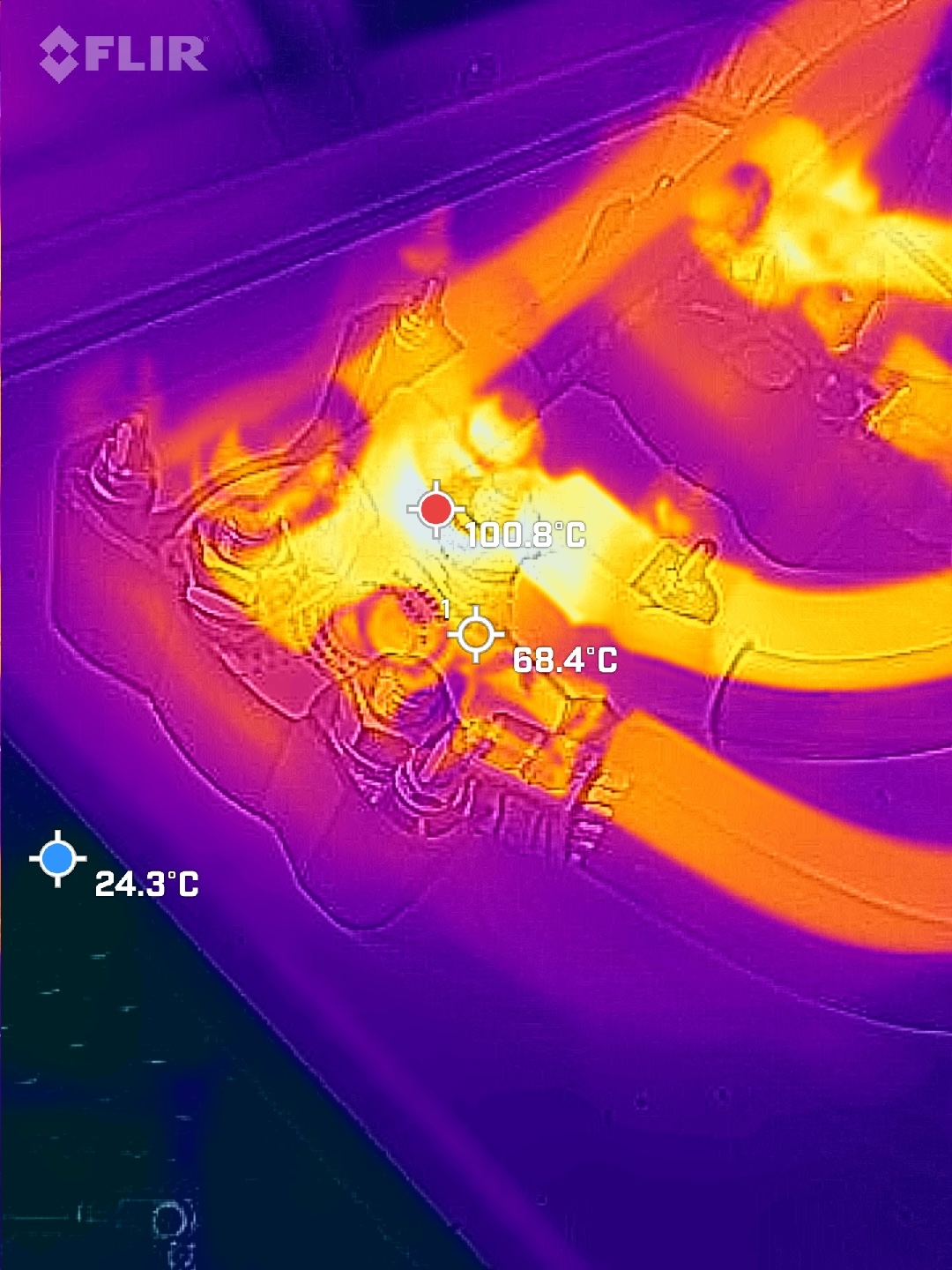
Thermal
During early testing the team discovered overheating anomalies at terminations suggesting high-resistance, poor distribution, and inadequate switching components.
Tank
The boat had an archaic voltage-based tank monitoring system and, surprisingly, there was no practical way of monitoring tank levels where the owner actually needed it – in the engine room. Without gauges where fuel transfer is carried out, the owner would have to stop work during tank pumping and visit the bridge to read the gauge levels in order to see how he was getting on!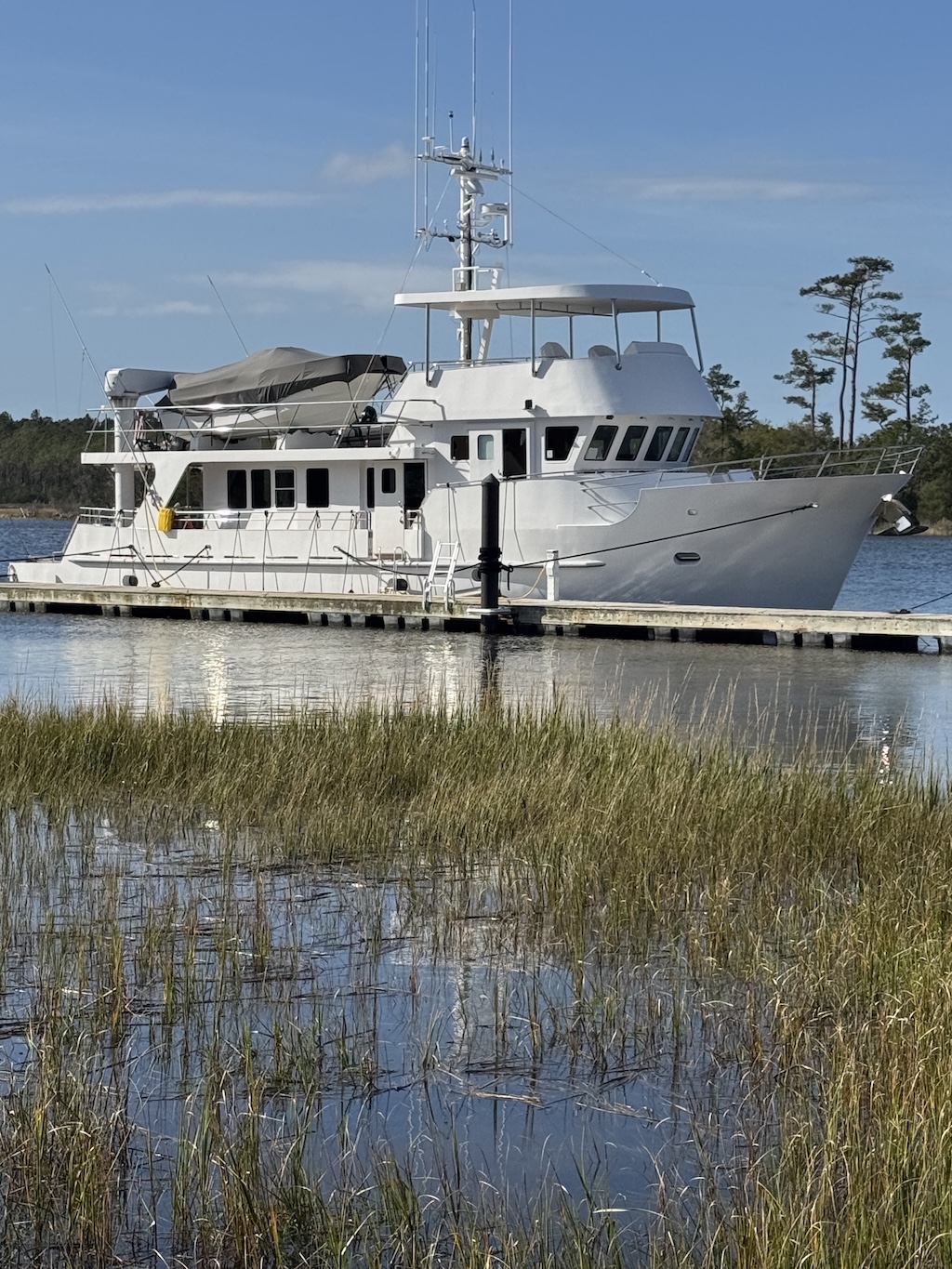
Problem Resolutions
Now that the problems have been resolved and all the advanced features are enabled, for owner, Jim, the standout result is that he no longer needs to supervise his power system – it just runs itself.
Most noticeably the Air Conditioning system – which consumes a lot of energy – switches in and out seamlessly. There are no power trips, and there is always sufficient power to run the AC service. In fact the whole boat can be run from the battery storage.
Over several months Jake and the MDS team, some of whom are individual members of the ABYC, rewired most of the DC and AC circuits. He also:
- Paralleled all four inverters correctly.
- Removed the manual selector switches and replaced them with automated operation.
- Thermal tested to find system’s maximum safe threshold and ensure above system set DVCC programming and fusing (525 Amps Sustained
- Integrated the generators properly with MDS autostart modules triggered by battery status and max amperage/inverter conditions data.
- Integrated correct system data communication – based on the Ekrano GX – so that all power devices can be controlled integrally.
- Rebuilt the tank monitoring using multiple GX Tank 140 modules together with a tablet/iPad display. Existing 12v senders powered by 24/12 -5 amp DC-DC converters. Data sent to a USB hub and supplied to the Ekrano GX.
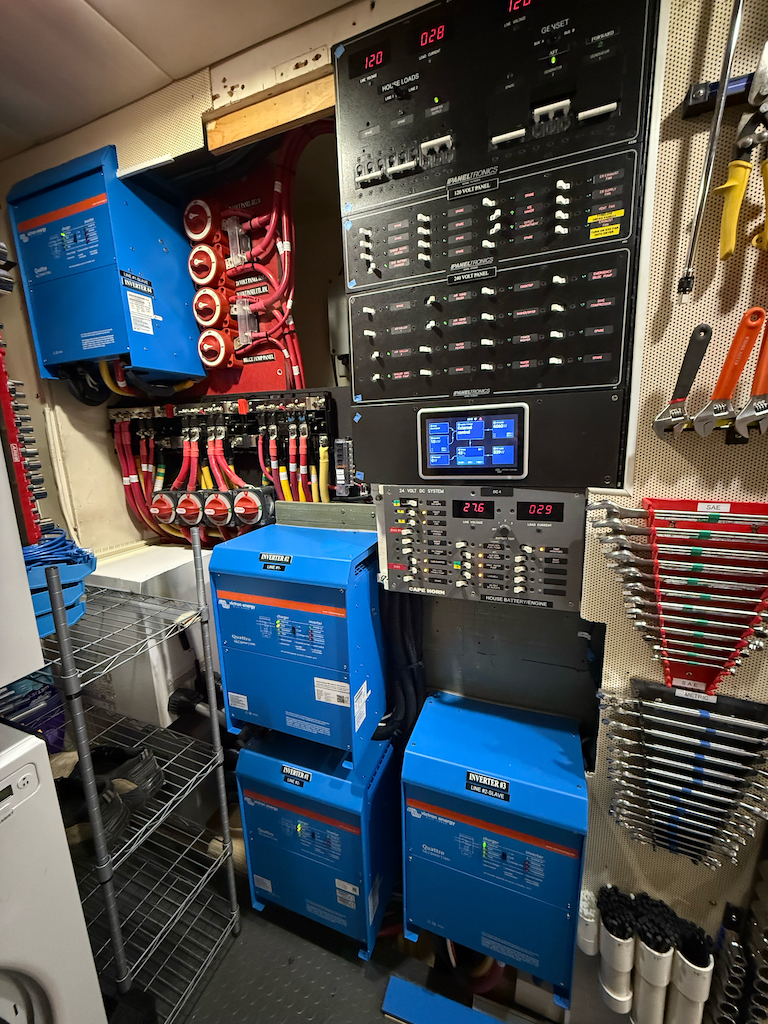
Data sharing between Victron and third-party manufactured devices has been enabled. Jake installed an ARCO Zeus A7000 Alternator and External Regulator. The regulator has been integrated with the Ekrano GX – a datacommunication device which controls the power installation – optimizing alternator output by referencing real-time battery and alternator voltage and temperature.
The vessel has a Garmin 8600 navigation system. Integrating the Ekrano GX and Garmin Instruments via NMEA2000 communication protocol allows for power and tank information to be made available on the bridge at the Multi Function Display.
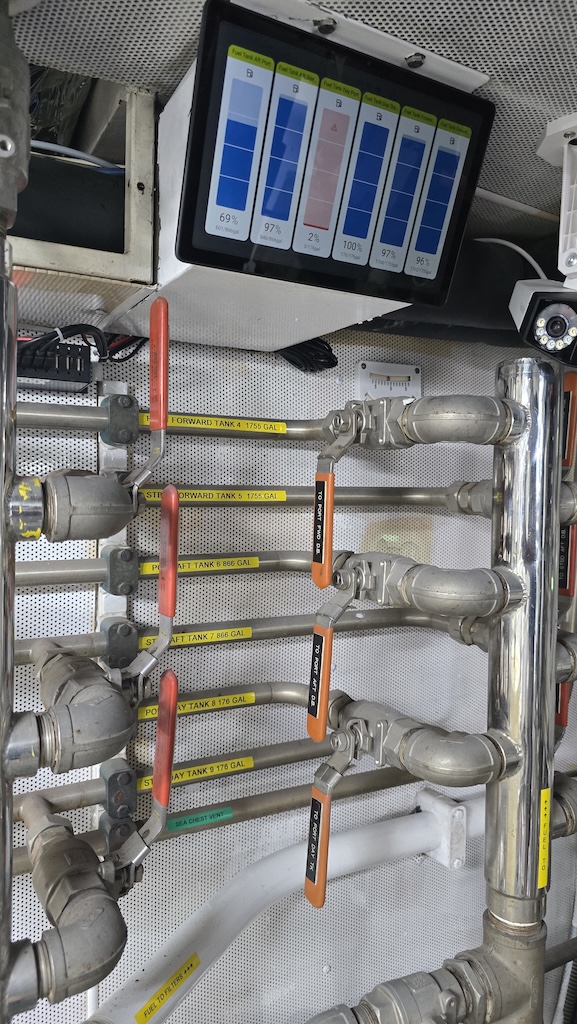
Tank sender data is now part of the power system integrating using GX Tank 140. He can now monitor his tank levels from different locations – in the engine-room fuel management area using Tablet display compatibility; on the bridge Multi Function Display …and on his phone using VictronConnect.
For the owner, the ability to read tank levels wherever required is a major operational improvement for fuel monitoring, transfer and replenishment, and allows the work to be carried out more safely.
Another feature of the new set up which has changed Jim’s experience of his boat completely is the automatic generator auto start/stop functionality. MDS built a timer module to adapt the Ekarano GX’s Start/Stop Feature to the Cummins Onan Generator’s – Prime – Start – Stop function.
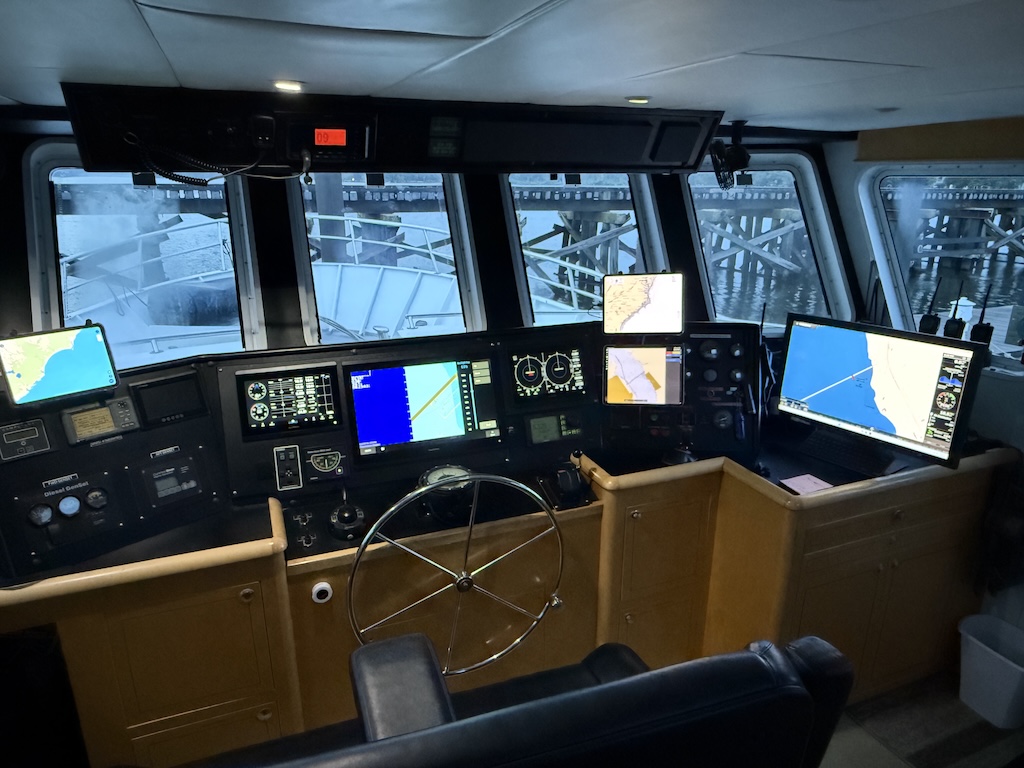
Cowboy now has an uninterrupted power supply on board – even if shore power fails. Speaking of which, when he wants to take the vessel to sea, Jim can disconnect the from shore power supply without first having to follow a tedious disconnect procedure in the engine room.
And best of all, perhaps, if there’s a power problem looming the Ekrano GX will send a status/alarm report straight to Jim’s phone via email. Marine Diagnostic Services gets the same notification, too, so that wherever Cowboy is in the world the MDS team can fix it remotely by using the Victron Remote Management (VRM) platform via a StarLink web access.
In short, the properly designed and programmed power system offers Jim capabilities and benefits he wasn’t even aware were available to him – and the result is an experience far beyond his expectation.
The final system upgrade inside Cowboy consists of:
● 4 x 24V-5k Quattro 120V (Two on each phase 120/240VAC)
● An Ekrano GX
● 4x GX Tank 140 ( waste/fuel/day/auxiliary tank/back-up/ freshwater/black)
Powered by 24/12-5A DC-DC keychain
● Ruuvi tags all over the boat, monitoring humidity, temperature, and air pressure
● 10x 24V Epoch 230V2 Elite (55.2kW battery storage)
● Class T fuses for AIC protection
● 7kW ARCO Zeus Alternator Regular (direct feed to house, backfeed starter with
external charger).
● CAN-Bus integration
● Balmar duo charge solenoid – repurposed for emergency start
● Two Generators routed to triple-pole breakers with sliding lockout for AC2 Input (240V output, 21kw )
● Starlink Maritime
● DC-DC charging from Generator 1 start battery (24V) to Generator 2 start battery for 12v charging solution.
12/12-18 An Orion DC to DC charger.
● Isolated sensitive DC common ground for autopilot
● Ekrano to Nema2000 Adapter providing info to Garmin 8600’s at helm and around vessel.
● 4 x Lynx Distributors/ 3x Power In.
● Lynx Shunt as a backup for Amperage via CAN-Bus monitoring.
● MDS-custom-built Generator autostart timer module for generator 1.
Product distribution and advice were provided by Intelligent Controls and associates.
Mutinous Autopilot
Jim was over the moon and ready to get Cowboy out of the boatyard.
Just a few days later, however, Jake got a panicked call from Jim: whilst motoring down the channel toward open water the boat’s electronic steering inexplicably altered course by 90 degrees – almost running the vessel aground.
Back on board to check it out, Jake noticed the rudder sensor was twitching randomly. The autopilot itself tested okay, so he checked the power supply and discovered the twitching happened whenever the DC power became “noisy” with too much AC interference. By monitoring the electrical noise over time he could predict exactly when the sensor would fail. Jake believed he could fix the problem with a Victron power converter in front of the autopilot to clean up any ripple voltage.
“Another blue box?” Jim asked.
“Yes, one more.”
“Oh, good!”
Jake installed a DC-DC power converter and the problem was solved instantly.
“That was a great win,” says Jake, “being able to draw, once again, from the amazing Victron toolkit to make whatever kind of power we need for the challenge at hand.”