1. Safety Precautions
Warning
Observe these instructions and keep them located near the battery for future reference.
The Material Safety Datasheet can be downloaded from the “Material Safety Datasheet menu” located on the Lithium Smart product page.
Work on a lithium battery must be carried out by persons familiar with lithium battery systems.
1.1. General Warnings
Danger
While working on a lithium battery, wear protective eyeglasses and clothing.
Any leaked battery material, such as electrolyte or powder on the skin or the eyes, must immediately be flushed with plenty of clean water. Then seek medical assistance. Spillages on clothing should be rinsed out with water.
The 3/4” threaded connection is provided solely for venting possible gases. It is not designed for cooling the battery and must not be connected to water, liquids, or any other media.
In the event of fire, overheating, or gas release, use suitable firefighting and cooling measures. CO₂, ABC, or foam extinguishers can help suppress flames initially, but they may not prevent re-ignition during thermal runaway. In the event of thermal runaway, disconnect the battery (if safe to do so) and apply intensive cooling using large amounts of water. As a rule of thumb, fully submerge the battery in water at about 20 °C, using a water volume of at least twice the battery volume. Always follow local fire authority guidance.
The terminals of the lithium battery is live when the battery is switched on or in the event of an internal fault. Do not place metallic objects or tools on top of the battery.
For maintenance or when working on or near the battery, always switch the battery off before you start. This maximises safety and helps prevent short-circuit and electric shock hazards.
Use insulated tools.
Do not wear any metallic items such as watches, bracelets, rings, etc. during installation and service.
Avoid short circuits, very deep discharges and excessive charge or discharge currents.
Warning
If the battery casing is damaged, do not touch any exposed material, electrolyte, or powder. These substances may be harmful and cause irritation.
Lithium batteries are heavy. To avoid muscle strain or back injury, use lifting aids and proper lifting techniques when installing or removing batteries.
If involved in a vehicle accident, they can become a projectile! Ensure adequate and secure mounting and always use suitable handling equipment for transportation.
Handle with care because a lithium battery is sensitive to mechanical shock.
Do not use a damaged battery.
The battery is splash-resistant (IP65) but not suitable for immersion. If the battery has been submerged in water, discontinue use and seek further advice.
1.2. Charge and Discharge Warnings
Caution
Overcharging or deep discharging can seriously damage a lithium battery and may render it unsafe for continued use. An external safety relay in combination with the EFS signal is recommended as redundant protection in addition to the internal BMS.
Under extreme fault conditions, such as severe internal failure or multiple protection mechanisms failing, the battery may release gases through its internal safety valve. The 3/4-inch threaded connection is provided to allow controlled venting of such gases. It must not be obstructed.
The Lithium SuperPack NG battery is capable of absorbing high levels of energy. If the primary charging source does not provide effective current limiting, it is strongly recommended to add an external current-limiting device to prevent overloading the charger and associated wiring.
Battery service life depends on the application. Published life-cycle data is referenced at 25 °C and assumes charge and discharge currents not exceeding 0,5C, with the specified depth of discharge.
The battery may be used in ambient temperatures from -30 °C to +60 °C. However, charging is only permitted when the cell temperature is within a safe charging range. If the cell temperature is below 0 °C, the BMS suspends charging and the internal self-heating function warms the cells; charging resumes automatically once a safe charging temperature is reached.
The battery's discharge temperature range is -30 °C to 60 °C. Discharging the battery at temperatures outside this range may cause severe damage to the battery or reduce its life expectancy.
During peak power demand, the top surface of the battery may reach temperatures of up to 50 °C.
1.3. Transportation Warnings
Warning
The battery must be transported in its original or equivalent package and in an upright position. If the battery is in its cardboard packaging, use soft slings to avoid damage. Ensure that all packaging materials are non-conductive.
Cartons or crates used to transport lithium batteries must have an approved warning label affixed.
Air transport of lithium batteries is subject to strict regulations. Refer to the applicable IATA Dangerous Goods Regulations and airline requirements before shipping.
Do not stand below a battery when it is hoisted.
Never lift the battery at the terminals; only lift the battery at the handles.
Note
Batteries are tested according to the UN Handbook of Tests and Criteria, part III, sub-section 38.3 (ST/SG/AC.10/11/Rev.5).
For transport, the batteries belong to the category UN3480, Class 9, Packaging Group II and have to be transported according to this regulation. This means that for land and sea transport (ADR, RID & IMDG) they have to be packed according to packaging instruction P903 and for air transport (IATA) according to packaging instruction P965. The original packaging complies with these instructions.
1.4. Disposal of Lithium Batteries
Warning
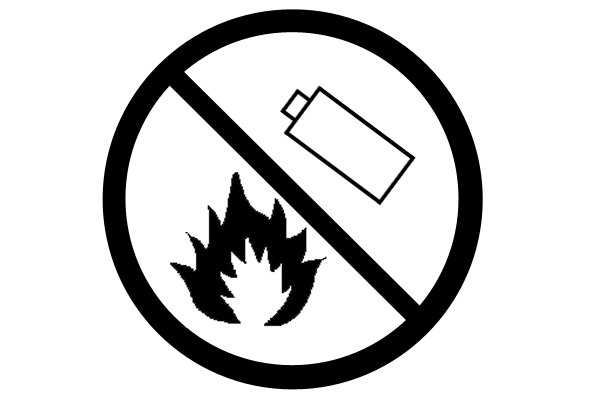
Do not throw a battery into fire.
Batteries must not be mixed with domestic or industrial waste.
Batteries marked with the crossed out bin symbol must be processed via a recognised recycling agency.
|
|