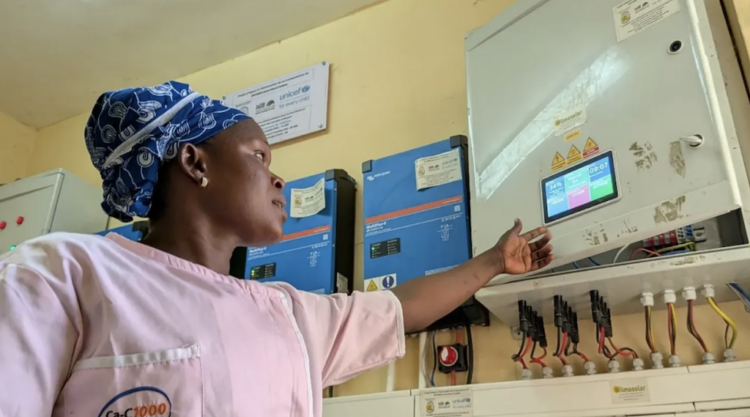
Four health facilities in the Northern Region of Cameroon have received new hybrid solar power systems designed to keep essential healthcare services running when the electricity grid fails.
It’s not uncommon for the ENEO electricity grid to break down for a twelve-hour period. Needless to say, such outages can be disastrous for the provision of care in local hospital maternity wards – without power they cannot provide incubators, replenish oxygen, illuminate medical procedures – or wards – nor maintain the standards of clinical outcomes for the new mothers and babies who depend on them.
Thanks to a UNICEF Cameroon program to invest in uninterrupted power, and the The Cameroonian solar company Solarly SARL who designed and installed the power systems which now serve health facilities at Pitoa, Ngong, Touboro and Tcholliré, that has all changed
These installations form part of a wider UNICEF initiative – supported by the Islamic Development Bank (IsDB), bringing reliable energy to hospitals in northern Cameroon.
New era of confidence
Hospitals in the North and Far North of Cameroon experience frequent power cuts which their generators haven’t always been able to cover. With limited power and fluctuating voltage they’re not capable of meeting spikes in demand or providing the clean power required to keep medical equipment online.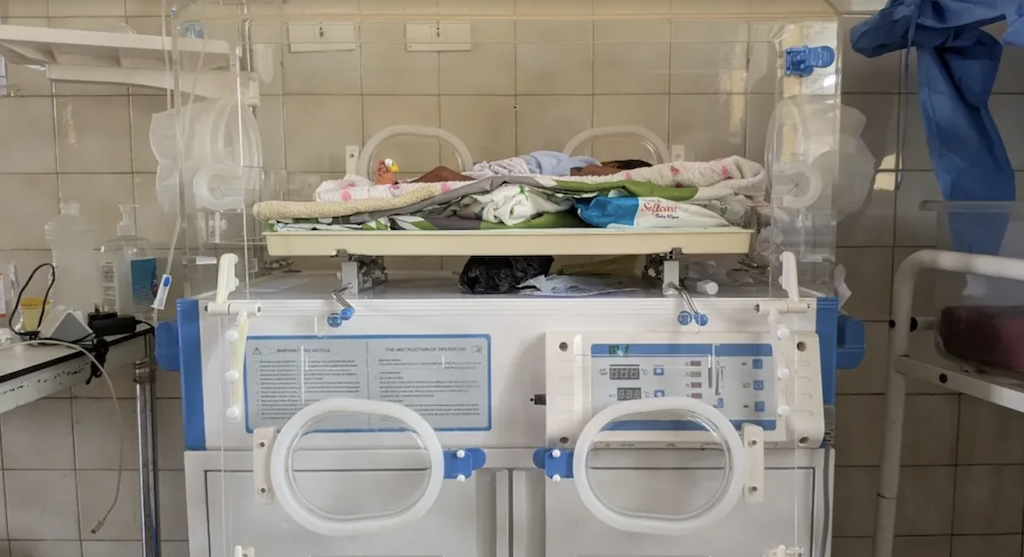
New solar-powered back-up energy is changing all that.
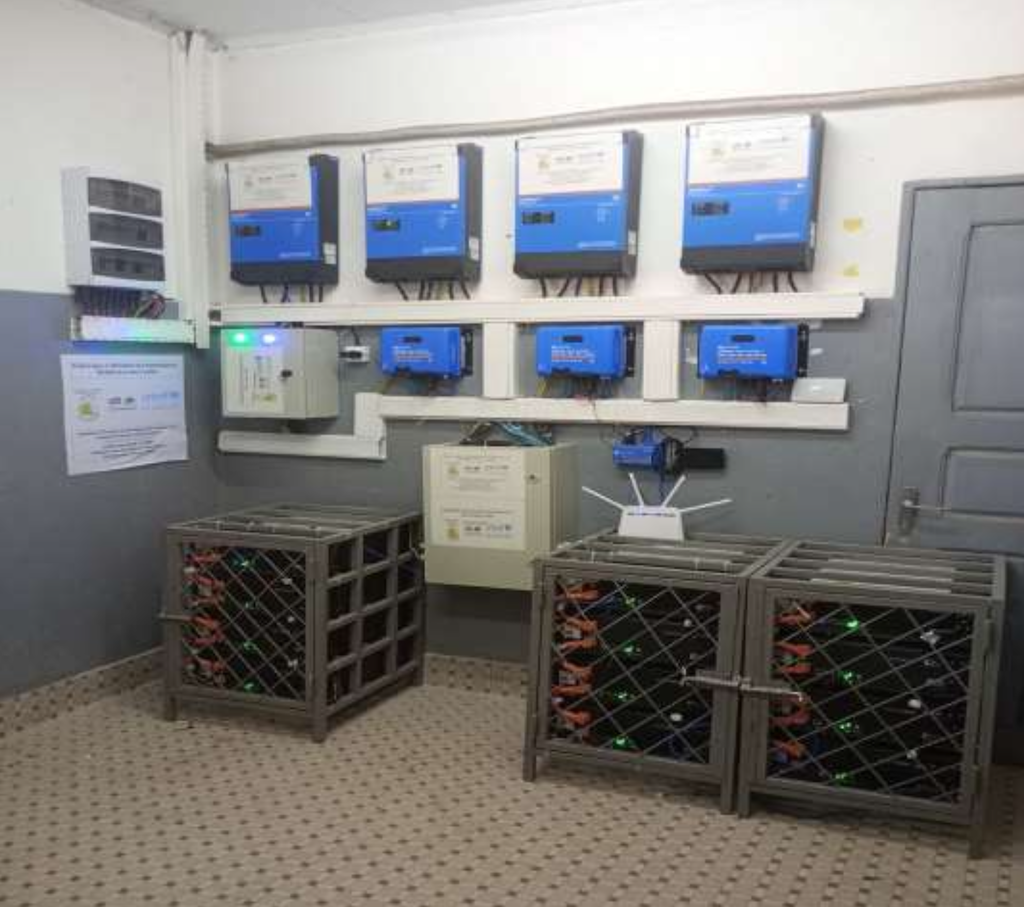
With between 7 and 17 kWp rooftop PV solar arrays at each location. The solar harvest is regulated by SmartSolar MPPT solar charge controllers to maximise energy storage into ZYC Simpo 5000 48V Lithium battery bank.
The systems are programmed via a Cerbo GX which provides data communication between Victron Energy and third-party components – allowing for seamless whole-system compatibility.
Most solar based energy systems have the goal of reducing grid energy costs by prioritising solar energy use – but the systems at these hospitals and clinics are programmed to ensure the batteries are maintained at 100% State of Charge – guaranteeing an uninterruptible 24hr power supply.
Programming of the Cerbo GX prioritises energy storage from the PV panels to the batteries. When the batteries are full, PV energy is used to run loads. At night – or during poor weather and high demand – the system chooses grid energy as the primary energy source. When the power grid fails, the Quattro or MultiPlus-II inverter/chargers automatically take over the hospital’s energy supply – within 20 milliseconds of the grid outage. The switch is made so quickly that even sensitive medical equipment does not flicker.
True sine wave power from the inverters will run the most sensitive medical equipment.
Stress free – better outcomes
It’s not possible to overstate the difference reliable power has made for patients and staff alike. In the past, during a power cut, staff have had to bring a motorbike onto the ward in order to use its headlight whilst assisting with child birth. The danger posed to life as a result of power outages – limited oxygen supply, loss of incubators, intensive care, refrigeration and surgical procedures – can only be imagined.
Recently, an expectant mother arrived at the facility at two o clock in the morning at the same time as the electricity grid failed. The hospital’s solar power system took over the power supply and the baby was able to be cared for – as was required – in an incubator. “It was 2 a.m. and there was no electricity in Yagoua. I don’t know what happiness would have escaped me if it wasn’t for this solar system. We mothers are reassured to know that health personnel can intervene, even when the Eneo power is cut off elsewhere.” she said.
Midwives, like Patchada, were faced with perilous births, sometimes in complete darkness. “It was difficult,” she said. “Some deliveries required cesarean sections, while many newborns needed vital care, including oxygen. Exhausted and anxious mothers were immersed in a climate of fear and uncertainty.”
Knowing what’s happening
The Cerbo GX also provides local and remote system monitoring for the dedicated management team. The VictronConnect app provides access to all system data – live and historic – together with programmable options and firmware updates regardless of whether the system manager – or installing engineer – is on site or on the other side of the world.
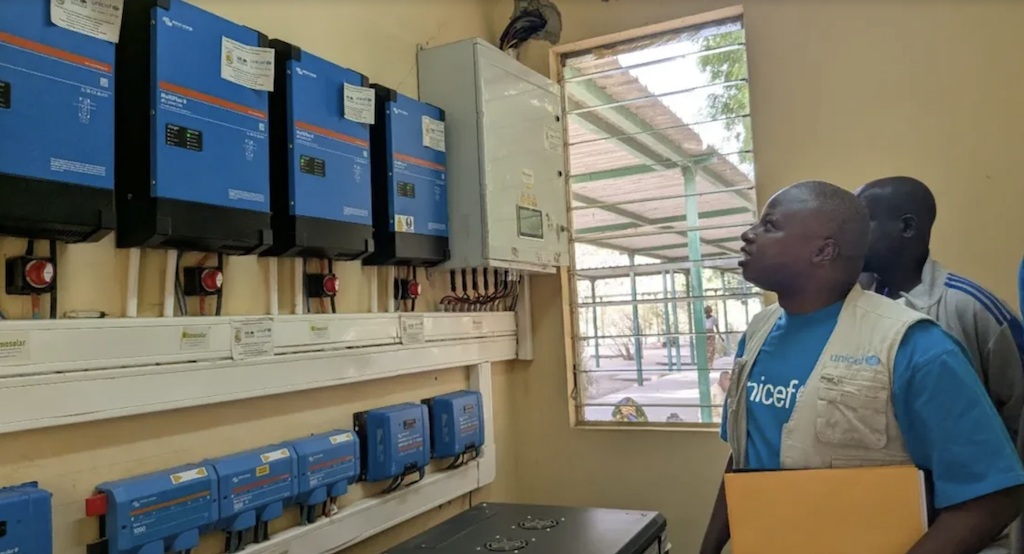
The teams receive basic system-maintenance training and are provided with a toolkit – promoting on site autonomous control. They check daily performance, read any system alerts, and interview staff to make sure that the power installation is meeting their needs.
Remote off-site monitoring is available straight from the VictronConnect app allowing system performance to be interrogated by Solarly SERL engineers without leaving their office. Remote programming functionality means they won’t even need to send an engineer to visit the hospital site to make significant programming changes or to update firmware.
Automated push-notifications will warn Solarly of any significant system event – allowing them to take remedial action to prevent a situation from impacting the smooth running of the hospital’s maternity ward.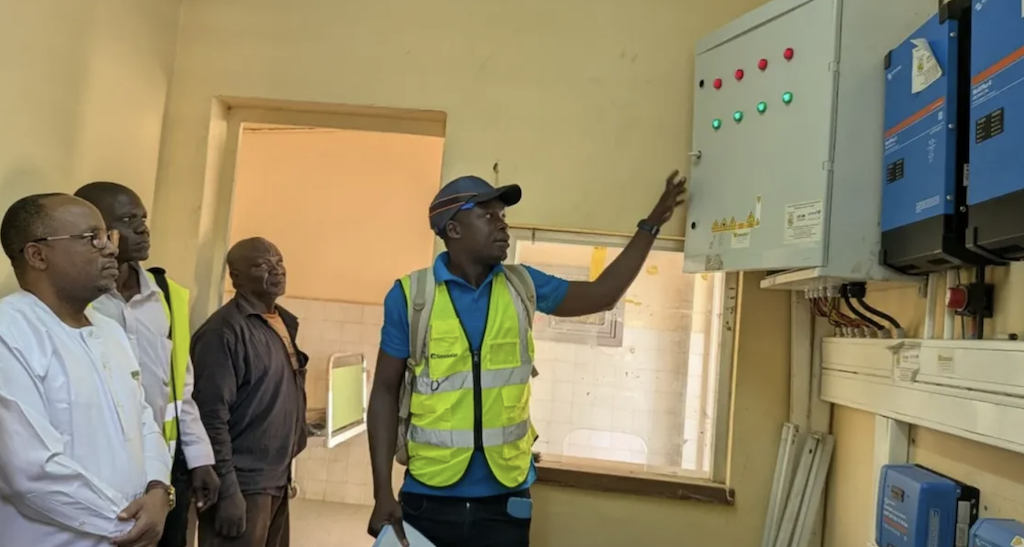
Healthcare can’t wait
UNICEF this year celebrate 80 years of providing support to disadvantaged children around the world. Today they operate in 190 countries.
Solarly SARL estimates that more than 10,000 patients a year will benefit from the stable electricity these four installations provide.
Energy resilience changes lives. High levels of infant mortality – particularly among those needing oxygen – are being greatly reduced and the morale of the healthcare team has been much improved.