Long after the guns fall silent, land mines and unexploded ammunition continue to blight the lives and livelihoods of people who live inside conflict zones.
Everyday activities – fetching water, walking to school, grazing livestock – come with great risk for villagers living where war has been fought.
The risk will not expire at some future date… each dangerous device must be found and made safe.
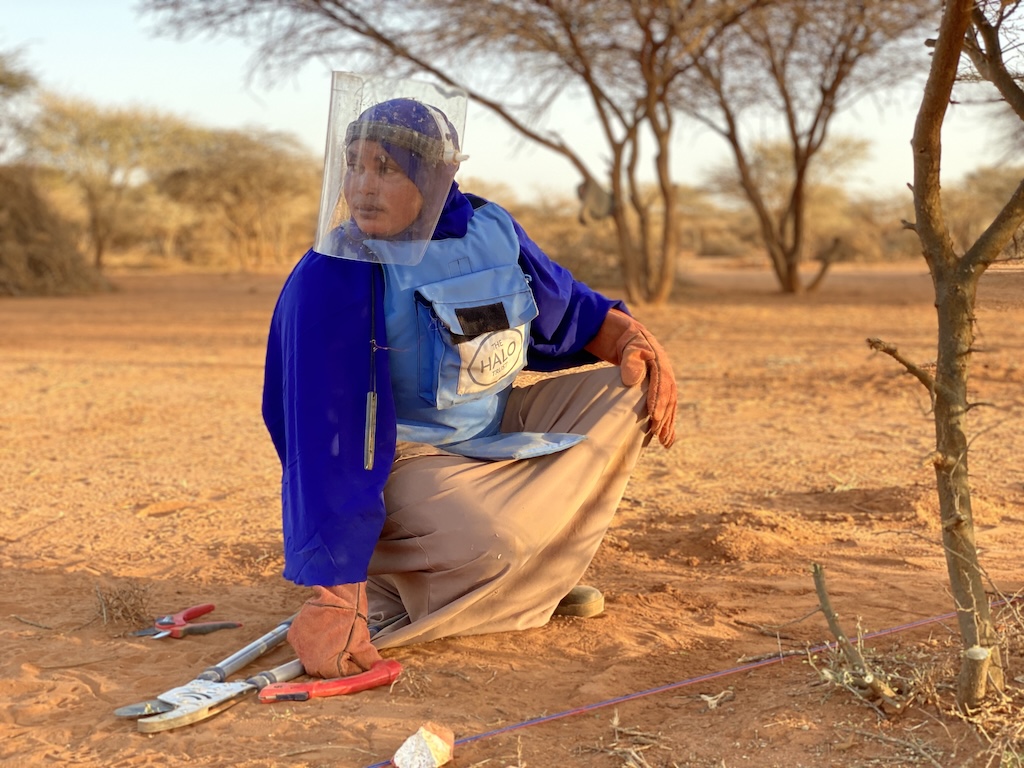
For almost forty years, around the world, the HALO Trust have been training local people to do that extraordinary work. Landmine clearance and the discovery and disposal of unexploded bombs is dangerous but essential work if life is ever to return to normal after conflict. At the same time it’s essential to educate children and local people how to recognise and behave around suspicious devices lying half-buried in the ground. HALO have a team of educators working in schools and meeting places throughout conflict zones, around the world, teaching people how to stay safe.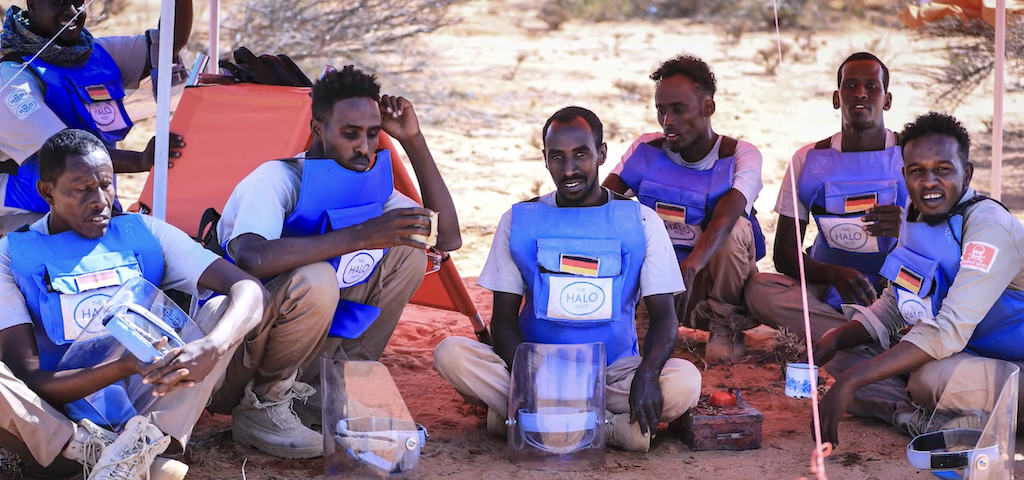
Conflict ends in Somaliland
Somaliland is one of more than 40 countries where that work has been taking place. HALO has been working in Somaliland since 1999, clearing areas heavily contaminated with landmines and other explosives remnants of war since a cross-border conflict with Ethiopia which was followed by a decade long civil war.
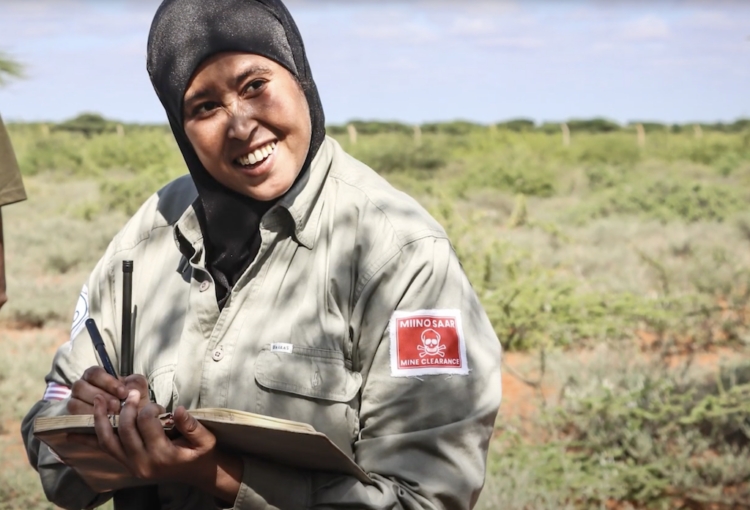
To carry out their program, HALO employ local people. Training local people to carry out this essential work provides much needed income streams in regions afflicted by poverty. More than 98% of staff in Somaliland are from Somaliland, and a quarter of the workforce are women. An important part of HALO’s work is to leave a legacy of change – the empowerment of women changes societies.
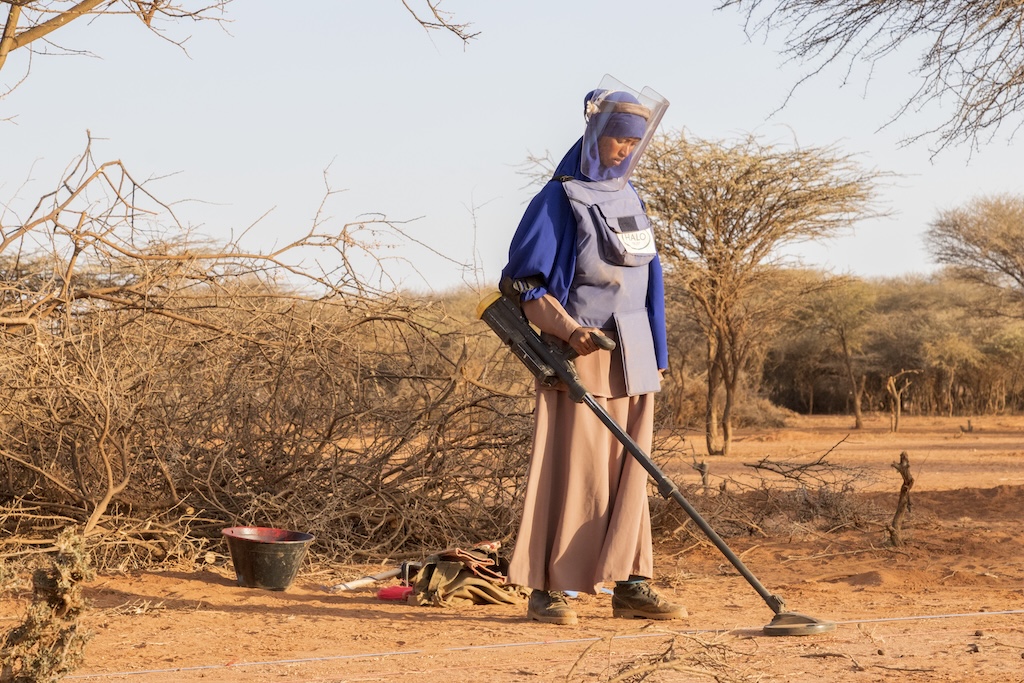
HALO works with vision – at the same time as conducting detailed searches for munitions, they take the opportunity to improve the land on which they work for farming and grazing, building water-retaining bunds and soil improvement measures as their work proceeds.
HALO’s mission is to save lives and restore the livelihoods of those affected by conflict. Among the many challenges presented by working in remote and often poor regions is the lack of infrastructure.
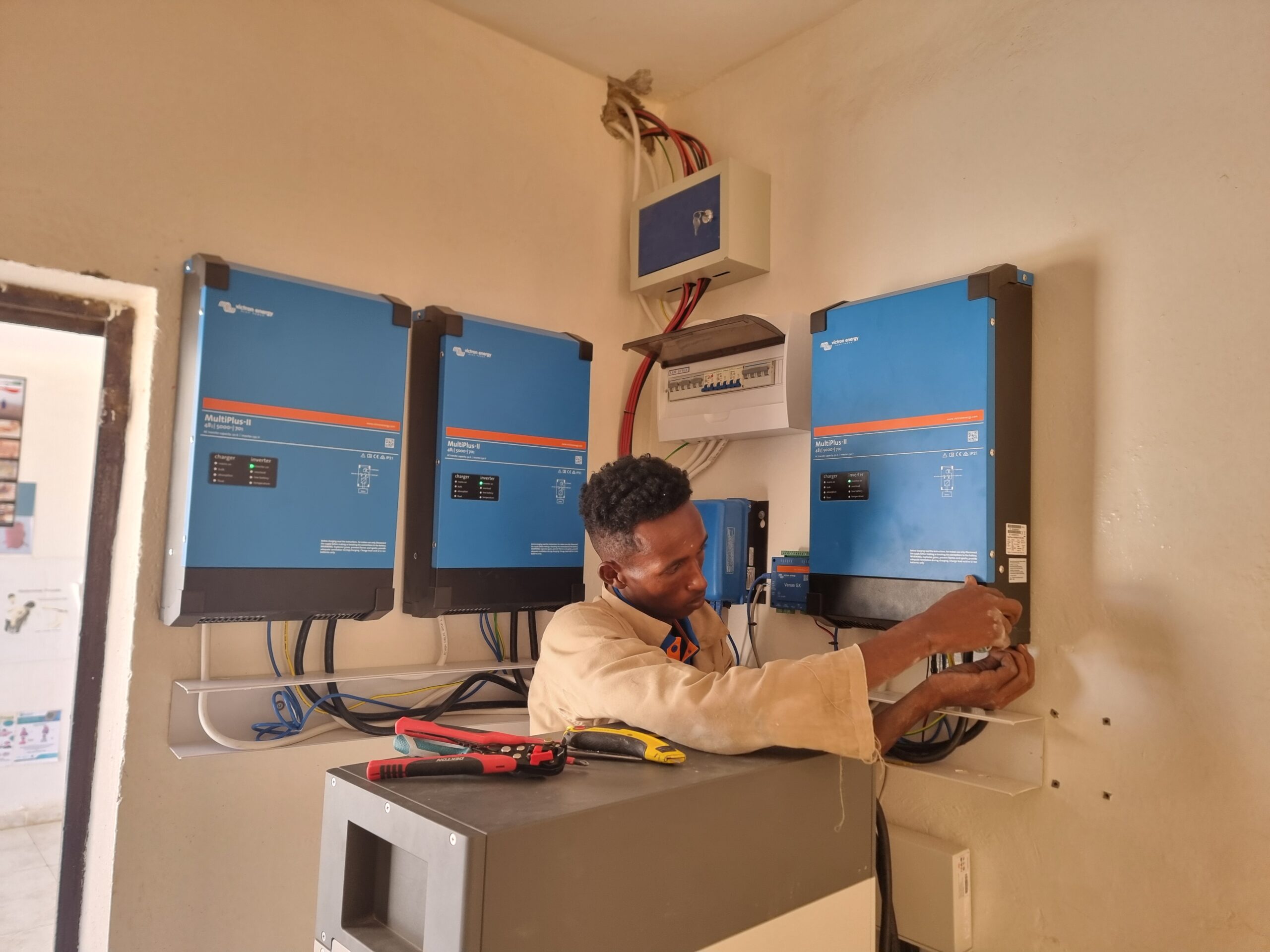
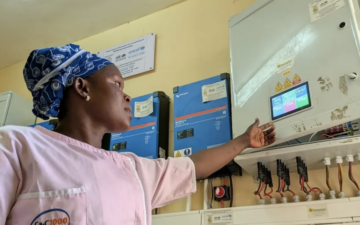
Only 36% of the population in Somaliland have access to electricity, most of which is generated by diesel generators – which are expensive to run and difficult to maintain and repair. Reliable power is needed for HALO’s operational needs – so the organisation has invested in a number of solar power systems for staff working in rural camps which host up to 100 people for 25 days at a time – and also back at their HQ in Hargeisa.
Installed by Solar Land Africa these installations provide power for recharging metal detectors, communication devices, and tablets – which are used for recording operational progress and mapping new minefields. GPS devices are used to demarcate new minefields and to pinpoint the location of explosive weapons which have to be destroyed.
Reliable lighting supports staff safety and camp security, as well as providing illumination for living spaces, washrooms and toilets. In the kitchens, food can be prepared at dawn and dusk for the workforce, and staff can attend mosque and worship in comfort.
Energy Security
The power system in their Hargeisa office comprises:
27 x Solar Panels of 400W offering 10.8kWp
There are three 5kVA MultiPlus II inverter/chargers
There are two SmartSolar MPPT 250/100 solar charge controllers
Five BYD LVS Lithium Batteries offer 20 kWh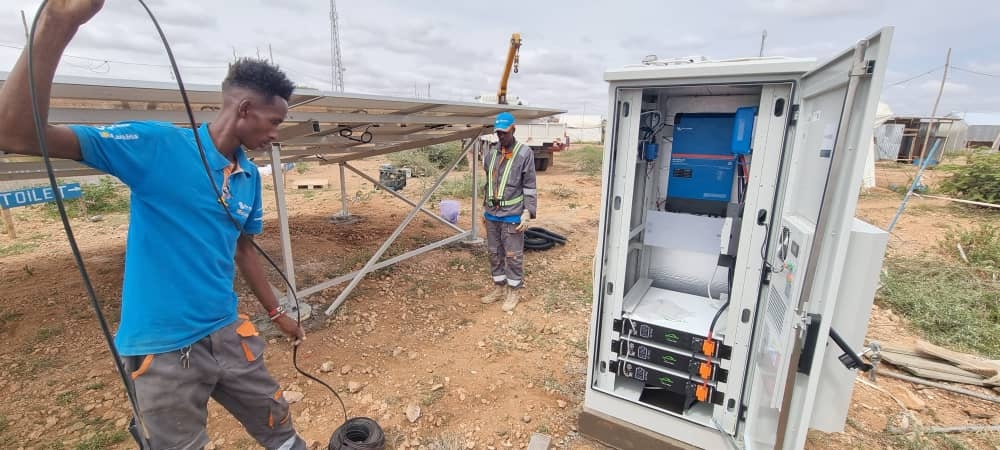
At the Bali Caabane camp twelve solar panels offer 6.66 kWp
There’s a MultiPlus II 5 kVA inverter/charger
A SmartSolar 250/100 MPPT solar charge controller
Three lithium batteries offer 15.36 kWh of energy storage.
And a Cerbo GX communication device allows remote system monitoring via the free to use platform Victron Remote Management (VRM)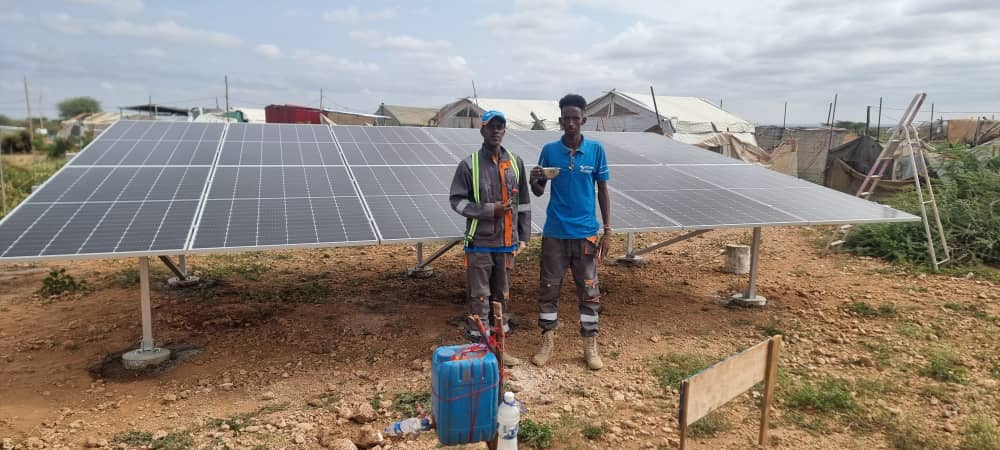
At the Caro Yaambo camp there are six solar panels offering 3.33 kWp
There’s a MultiPlus II 5 kVA inverter/charger
A SmartSolar 250/100 MPPT solar charge controller
10.2 kWh of lithium battery storage
And a Cerbo GX communication device allows remote system monitoring via the free to use platform Victron Remote Management (VRM)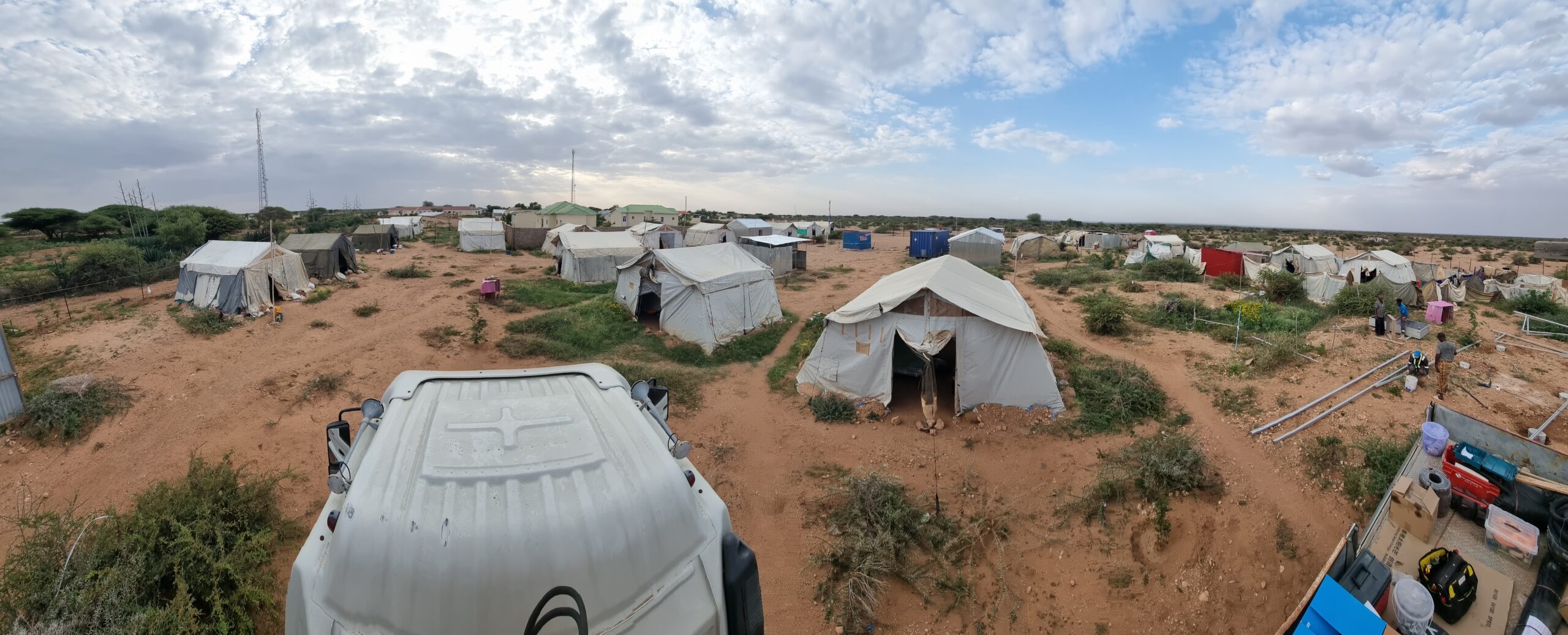
During HALO’s almost forty years of operation they have cleared more than 14.5 million explosive items – including over 2 million landmines. Fourteen million people have benefitted from that work.
They’ve conducted 487,000 local community awareness sessions to more than 9.1 million people.
The Somaliland programme has cleared the equivalent of 45,739 football pitches of 13,000 explosive devices, including landmines, mortars, grenades and other hazardous items. This has benefitted more than 700,000 people, improving the physical security of the population, supporting local livelihoods through access to land and natural resources, and providing safe land for essential social development.
Funding Crisis
Regrettably, the funding for the programme has been declining over the past few years and the continuation of this life-saving work is now under threat. HALO’s goal is to help Somaliland achieve mine-impact-free status within the next few years—an accomplishment reached by only a handful of countries worldwide. Without sufficient funding, the progress will slow and communities will remain exposed to the dangers of landmines for longer than necessary
If you’d like to help HALO help local people to deal with the legacy of conflict, you can visit their donations page.
Let’s hear from a member of the senior operational staff who was born in the region – Hassan Kossar: