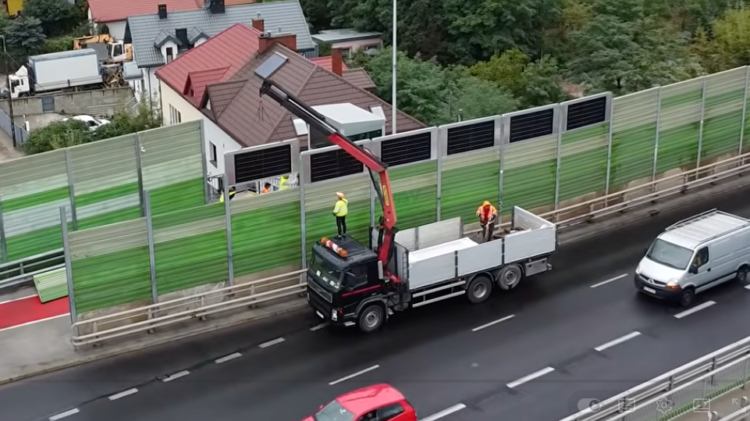
In Warsaw’s Gocławek district, a stretch of everyday infrastructure has been reimagined. A busy viaduct carrying traffic over the PKP Warszawa-Gocławek railway station which has acoustic barriers are now doing more than simply reducing noise — they’re generating energy.
Powering the passenger elevator which connects the flyover to the railway platform below, this first-of-its-kind installation is fully-operational, and in daily-use.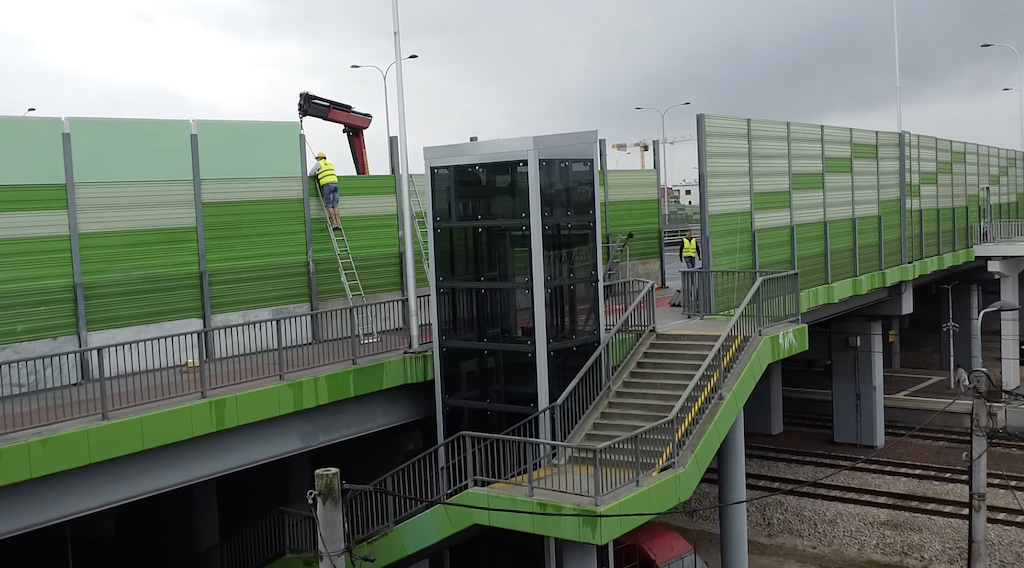
The project began when the administration of the City of Warsaw wondered whether the acoustic barriers installed in close proximity to the elevator shaft – which has a constant power demand – can be used to do both jobs.
The question resulted is a system where renewable energy generation and infrastructure resilience go hand in hand.
- The acoustic barriers continue to reduce traffic noise
- Integrated PV modules generate electricity
- A Victron-based energy storage system ensures continuous operation of the elevator’s HVAC and safety systems – and during grid outages, the elevator runs on renewable battery power, maintaining safe conditions for passengers.
Custom Acoustic-PV Hybrid Panels
The upper section of the existing noise barriers has been replaced with custom-engineered acoustic-PV panels developed by Alfa Bond Kohlhauer. Each panel integrates a full-size, high-efficiency 590 Wp solar module into a structure designed to preserve acoustic performance – colour matched to the existing street furniture, and of a slightly raised height to show off the innovation. In total, 8 panels deliver a 4.72 kWp system.
The panels are mounted vertically as part of the barrier structure not at the typical 30°–45° tilt. While vertical mounting reduces peak output, it offers some advantages:
- Better generation during mornings, evenings, and winter months
- Improved self-cleaning due to rain runoff
- Lower maintenance requirements
Expected annual yield is approximately 4 MWh, with real-world best-daily production reaching around 20 kWh. Live, historic, and accumulated data can be viewed on the installation’s publicly available Victron Remote Management page.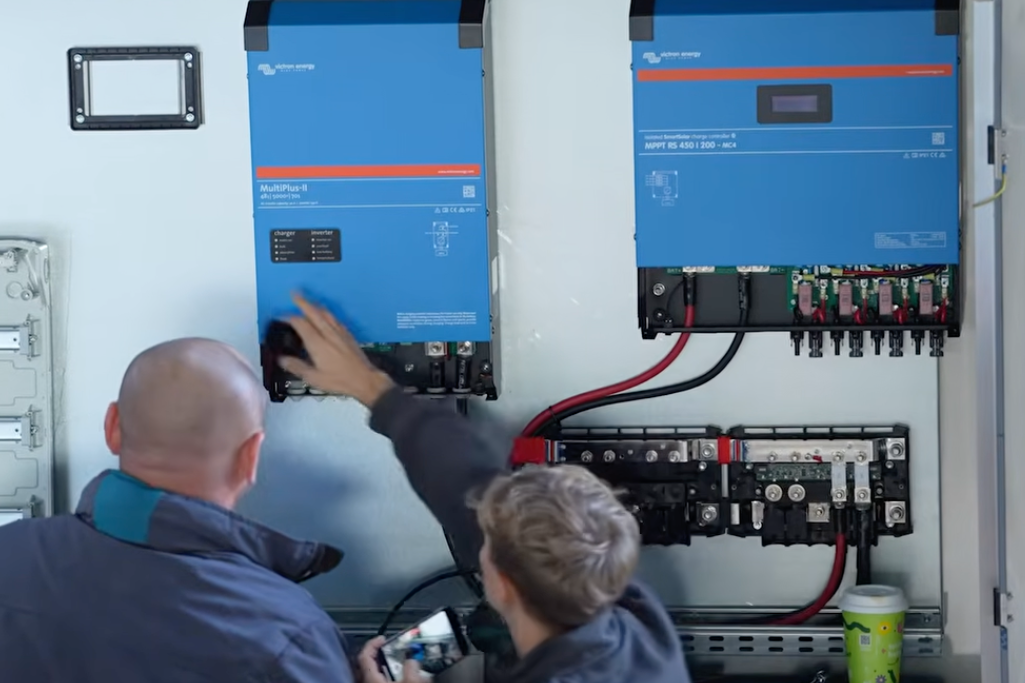
DC-Coupled Storage
The system was designed and built by ENERP featuring DC-coupled architecture, optimised for efficiency and simplicity:
- MultiPlus-II 48/5000
- SmartSolar MPPT RS 450V solar charger
- Lynx Distributor & Lynx Power In
- Cerbo GX with VRM monitoring
- 15 kWh Pytes battery storage
By avoiding a traditional AC-coupled inverter, the system benefits from higher round-trip efficiency; direct battery charging from PV and reliable operation even in passthrough mode.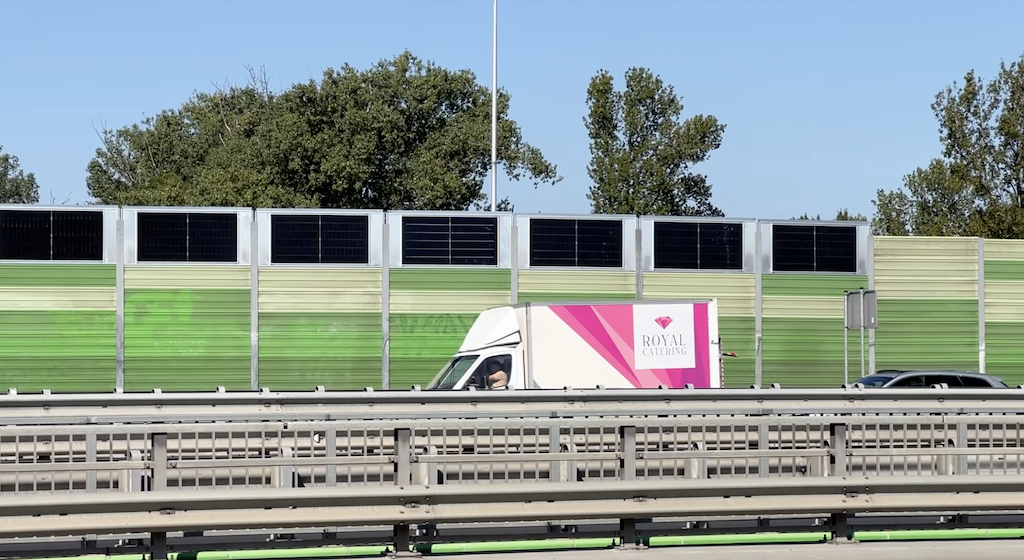
Built for Real-World Conditions
All system components are housed in a custom stainless-steel enclosure built by Strabag and designed for roadside conditions, including integrated cabling through the viaduct structure, and the elevator shaft.
The electricity grid supplies power to the elevator under normal conditions – the elevator HVAC is powered by the inverter. However, when there is a grid power failure the inverter takes over the elevator operation.
A New Use for Urban Space
Warsaw’s broader goal is to explore “non-obvious” locations for solar deployment. Rooftops and solar farms are already well utilised but within cities there are many vertical surfaces along highways, ring roads and expressways which use noise barriers and could support more solar panel integration if this pilot scheme proves economically successful.
The results are encouraging. If performance continues as expected, the concept can scale across thousands of metres of acoustic barriers throughout cities.
It’s an example of how thoughtful system design and integration can take existing infrastructure and add value.