1. Introduction
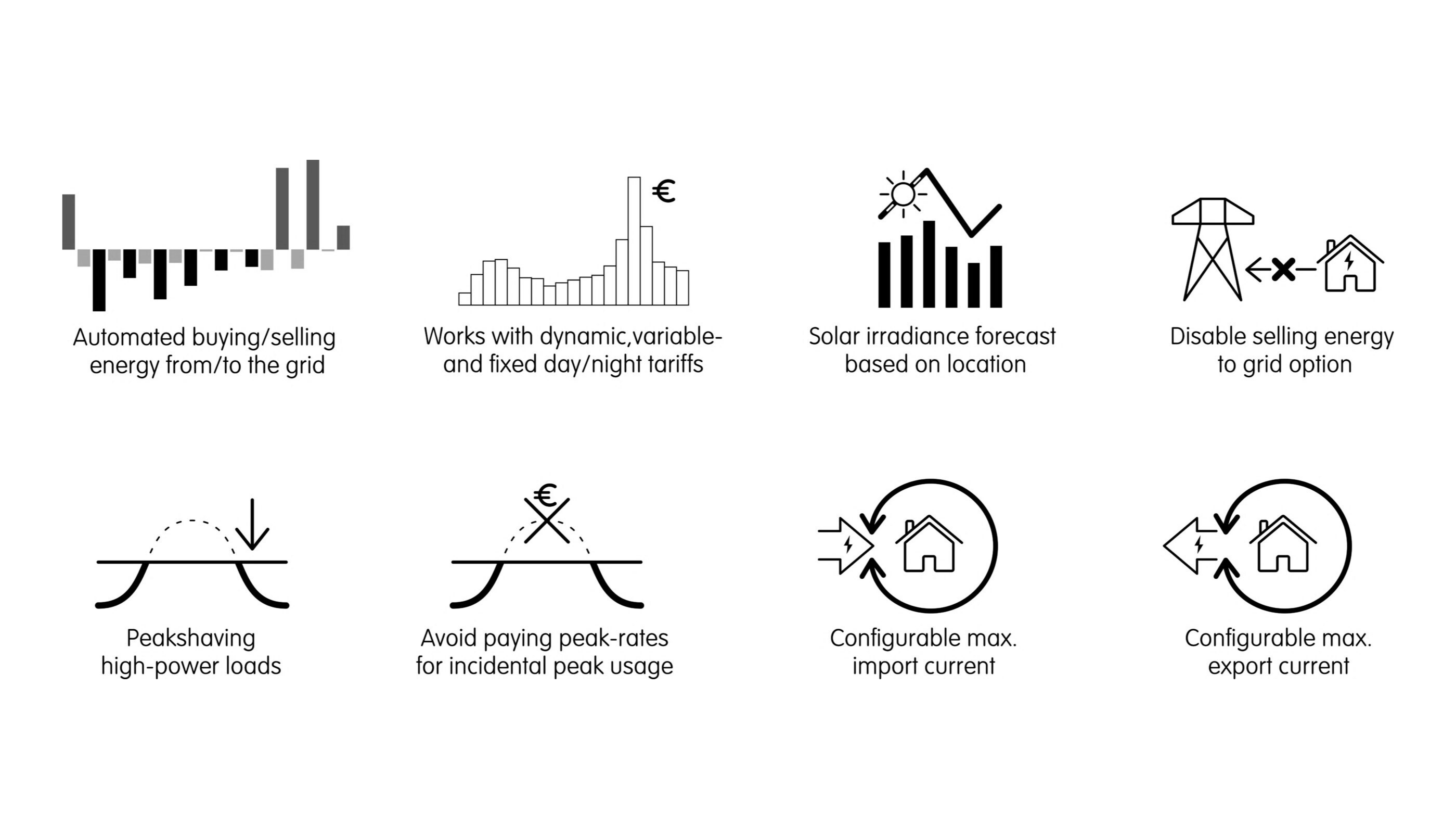
Dynamic ESS is a control algorithm that runs on the VRM portal and the GX device. It optimises the charging and discharging of the battery using real-time and day-ahead electricity prices, solar generation forecasts, and the system's consumption pattern. Rather than following a fixed strategy, it builds a schedule that determines when to charge the battery, when to discharge it, when to draw from the grid, and when to feed back into it.
The goal of Dynamic ESS is to optimise energy use from a financial perspective. This is what distinguishes it from standard ESS, which aims to minimise grid use regardless of price. Standard ESS stores surplus solar energy for later self-consumption; Dynamic ESS additionally determines when it is most cost-effective to buy energy from the grid or sell energy to it, based on the prevailing prices.
Dynamic ESS is applicable to both residential and commercial installations. It is intended for systems on a dynamic energy contract, where prices change throughout the day, and for systems on a fixed contract with prices that differ by time of day or between weekdays and weekends.
Dynamic ESS has two operating modes:
Green mode | Trade mode | |
|---|---|---|
Surplus solar | Sold to the grid only after consumption and battery charging. | Sold to the grid when it is more profitable. |
Energy in the battery | Reserved for consumption. | Used to trade. |
Battery is charged | When prices are low. | When it is beneficial for trading. |
Emphasis | Consistent and predictable results. | Maximum financial use of the energy storage system. |
1.1. How Dynamic ESS works
Dynamic ESS works by building a schedule. Rather than responding only to the present moment, it plans ahead, so that energy predicted to be needed later in the day is already stored, and stored at the most economical price.
The schedule is divided into intervals, and sets a target for each one. For each interval, Dynamic ESS determines which of the following is most economical:
charge the battery
discharge the battery
import from the grid
export to the grid
hold
To build the schedule, Dynamic ESS uses:
the buy and sell prices for each interval, from either a dynamic contract with changing prices or a fixed contract with defined price bands
the cost of the energy currently stored in the battery, based on what was paid to charge it
the battery's capacity, state of charge, maximum charge and discharge rates, and cycle cost
a solar yield forecast, based on the weather and the system's location
a consumption forecast, based on the site's own energy use over the previous four weeks
Following the schedule
Each target is a state of charge, the battery level Dynamic ESS aims to reach by the end of that interval. The system charges or discharges at whatever rate is needed to move from the current level towards the target. This is why the charge or discharge rate can appear to change during an interval: the system is continually correcting its rate to arrive at the target, and adjusts as the forecasts and the actual load change.
Local conditions vary from what the schedule anticipated, for example when cloud reduces solar production or an unexpected load appears. Dynamic ESS adjusts to these conditions, following the intent of the schedule rather than the schedule to the letter. Where solar production is not sufficient to reach the target, for instance, it will not import from the grid to make up the difference.
Solar production itself can also be part of the economics. With the optional Disable solar at low buy prices setting, solar production is stopped while the buy price is below the configured threshold, and resumes when the price rises above it. The setting is described in System.
Battery wear
Dynamic ESS treats the battery as having a cost to cycle. Every charge and discharge cycle contributes to battery wear, and the system assigns a financial value to that wear through the battery cycle cost. Dynamic ESS cycles the battery only when the financial benefit is greater than the cost of the cycle.
Where Dynamic ESS runs
The schedule is prepared on the VRM portal, which has access to the price and forecast data. It is then carried out by the GX device, which controls the inverter/charger and the connected energy sources. This division is why two-way communication between the GX device and VRM is required. The schedule is recalculated regularly, so that new price data, updated forecasts, and actual system behaviour are fed back into the plan.