When a fleet of electric charter boats is so energy-efficient that it generates more power than it uses, standard battery monitoring can struggle with accurate range estimations. For Bernd Rudolf, founder of Woterfitz and a member of the Victron Recommended Software Integrator Program, this was the perfect opportunity to leverage Victron’s open and customisable ecosystem to build a bespoke dashboard tailored precisely to their needs.
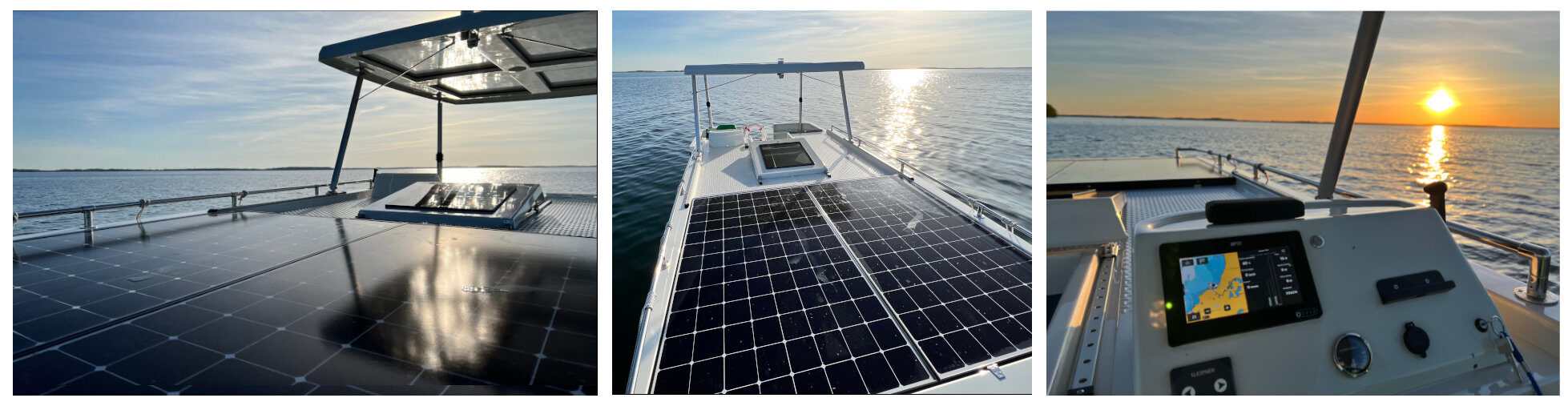
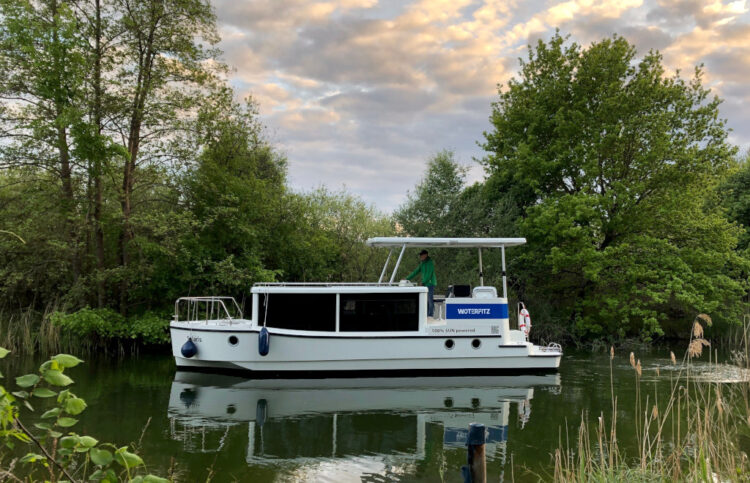
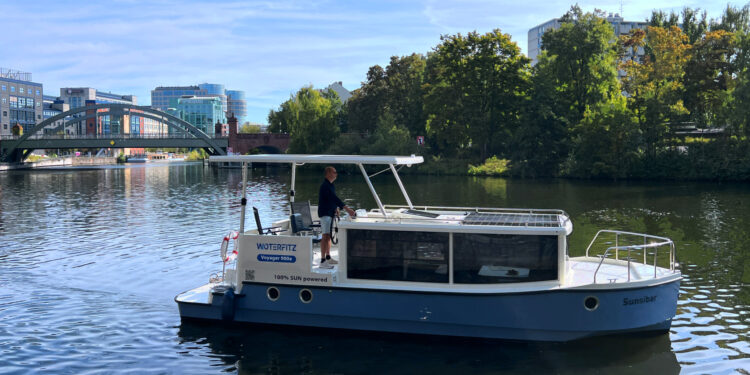
Based in Rechlin/Müritz, Germany, Woterfitz designs and builds 9-metre electric motor boats at its own small shipyard. The vessels, known as the Voyager 900e, are offered as charter boats, as well as, upon special request from previous charter customers, custom-built boats for sale.
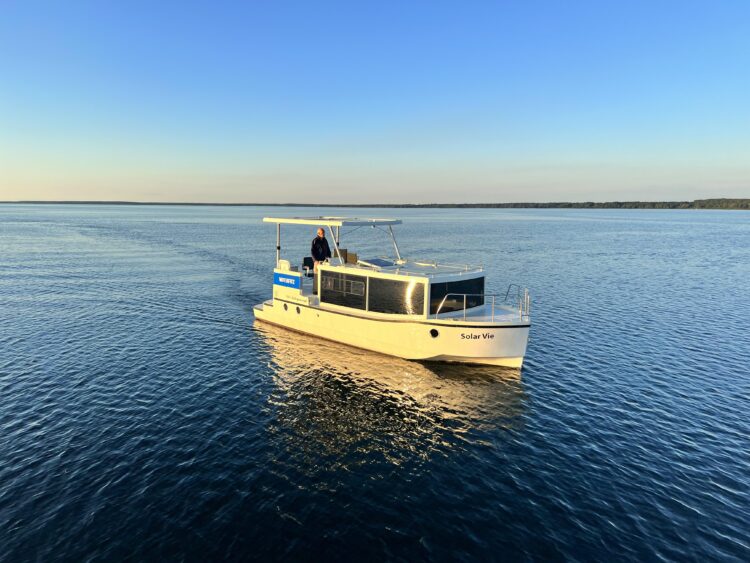
Since their launch in 2023, the charter fleet has already grown to around 20 boats operating throughout the summer season on Lake Müritz, allowing customers to enjoy the Mecklenburg Lake District, from Lake Müritz itself to the surrounding canals, which lead all the way to Berlin and beyond. Each boat in the fleet is fully self-sufficient, with only an optional shore power connection for convenience.
Victron Energy system on each boat includes:
- MPPT 450/100
- Multiplus-II 48 V, 3kVA
- Cerbo GX communication centre
- 2.4kW of solar panels
- 24kWh LiFePO4 batteries
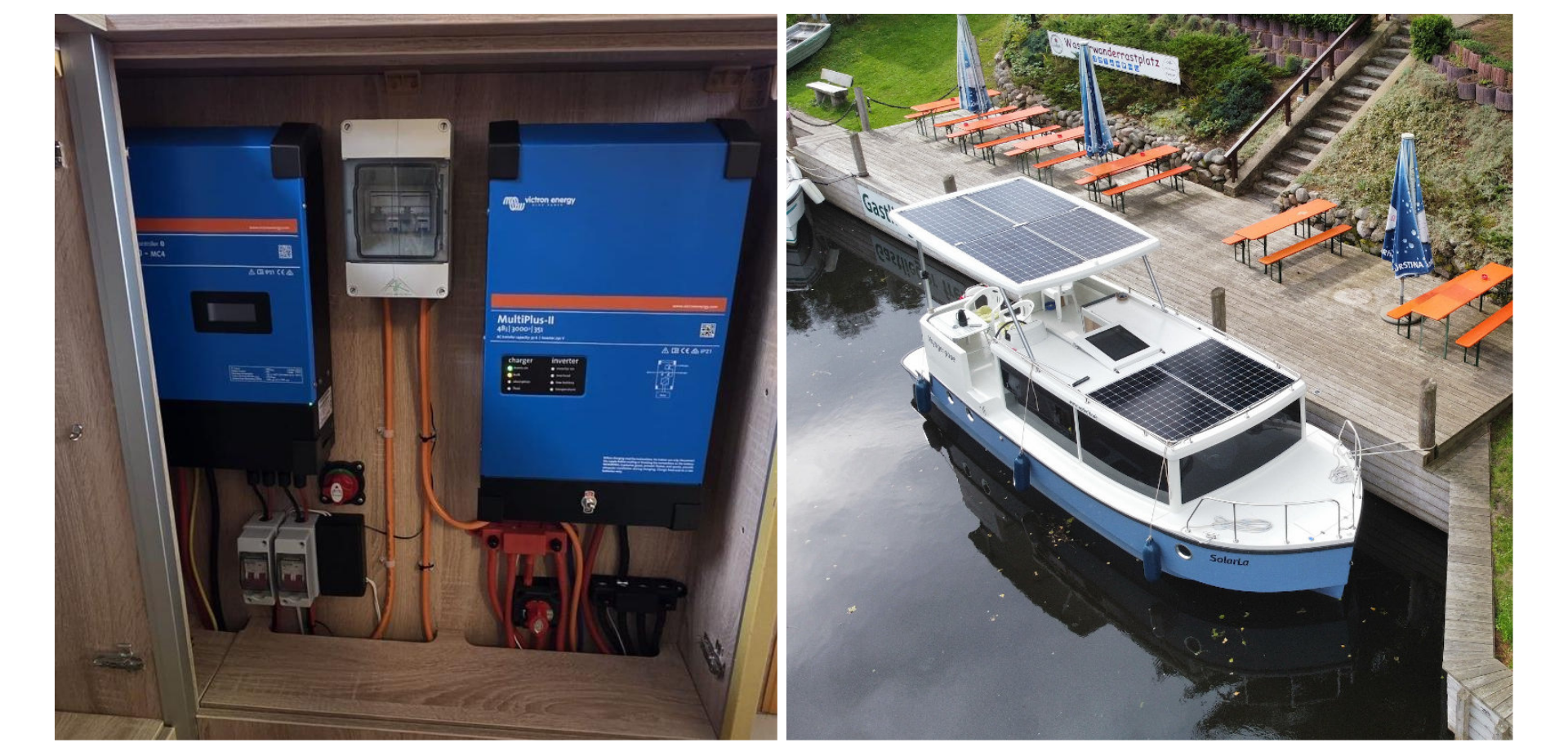
The result is a vessel with remarkable range: in late September 2025, for example, Bernd covered 102km through central Berlin over 2.5 days, using only around 40% of the battery’s state of charge.
The Voyager 900e is driven by an ePropulsion electric motor. At a speed of 8 km/h, the motor draws around 1.5kW. On a sunny day during the summer season, the 2.4kW solar array can comfortably power the motor as well as charging the battery bank.
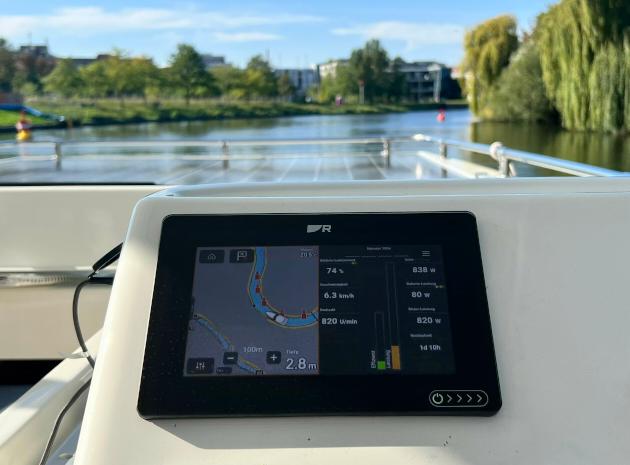
When Bernd was cruising through the canals at 6.3 km/h on a September afternoon, for instance, the display showed 820W of motor power being drawn, with 838W coming in from the PV array.
The challenge and the solution
With such an energy-efficient electric boat, an unexpected challenge emerged. When the sun is out, the 2.4kW of solar panels can propel the boat and charge the battery at the same time, so the input exceeds the output, resulting in an infinite ‘time to go’ being displayed. Even though technically correct, this is not particularly useful for a captain planning a longer journey through the canals.
To tackle this challenge, Bernd and the Woterfitz team built a custom software solution running on the Cerbo GX. The Cerbo GX sits at the centre of the integration, connected to a custom mainboard that handles all the wiring between the cockpit and the rest of the vessel’s systems. On top of VenusOS, the team runs NGINX and PHP directly on the Cerbo to serve a bespoke web-based Human-Machine Interface (HMI), which is displayed on a Raymarine device in the cockpit
The HMI pulls live data via MQTT and presents it in a way that is immediately relevant for the captain, displaying:
- Where the power comes from (batteries or solar)
- An efficiency bar that shifts from green to red as speed increases, giving the captain an intuitive feel for energy consumption at a glance.
Beyond the display itself, the integration runs deeper. The ePropulsion motor data is integrated into the Victron system via a custom decoder. The RS485 data stream from the motor is decoded, fed into the Cerbo over HTTP, and then published onto the Victron DBus, making it available to the rest of the system alongside native Victron data.
The Cerbo also handles low state-of-charge protection for the boat’s electric heating system and 48V water boiler. When the battery drops below 30% SoC, the Cerbo automatically disables both, reserving enough energy for propulsion.
Looking ahead
The Woterfitz team is continuing to develop the platform. A dedicated internal touch display is planned for day-to-day use. It will show key information such as SoC, time to go, and water levels, and allow the user to control the heating and other onboard systems. Rather than exposing Victron’s native interface, it will present a simplified, abstracted view appropriate for a charter guest or boat owner, covering just the things they actually need to interact with.
A mobile app is also in development, giving boat owners and charter guests remote access to key information like battery state and the ability to preheat the cabin before boarding.
Final remarks
Woterfitz’s custom software integration is a strong example of what is possible through Victron’s open ecosystem, and the many possibilities it opens up for skilled software integrators. By using DBus to publish third-party motor data, MQTT to stream it to a custom display, and the Cerbo GX as an on-board application server, Bernd has built a fully integrated energy management and navigation aid tailored precisely to the needs of a solar-electric charter boat.
If you would like to learn more about Woterfitz’s electric boats or book your next holiday on the Müritz in Germany, visit their website at woterfitz.de. And if your project could benefit from Bernd’s software integration expertise, you can find him as a Victron Recommended Software Integrator on the Victron Recommended Software Integrators list.
Resources for installers and software integrators
This story is just one example of how Victron’s customisable ecosystem can help businesses and individuals to unlock new possibilities, bridging technology and practicality to make life easier. If you are an installer or a software integrator, here are some links that might be useful for you:
- To find a software integrator suitable for your project, visit our Victron Recommended Software Integrators list.
- Are you a software integrator? Take the next step and apply here.
- To learn more about the Software Integrator Program, visit our webpage on Victron Professional
If you need any assistance or would like to share your story about the Software Integrator Program, please get in touch with us at softwareintegrators@victronenergy.com. We’d love to hear about your projects and see the innovative solutions you’re creating!